
Discovering Mirabella Imbaccari: Sicily’s lace-making soul
There are towns in Italy that shine quietly. They don’t seek attention with grand monuments or polished tourist brochures. They simply endure—like an heirloom carefully preserved, or a whisper from the past that refuses to fade. Mirabella Imbaccari is one of those towns. Tucked into the inland hills of Sicily’s Catania province, Mirabella Imbaccari is a place where time folds gently over itself. It’s not on the usual travel itineraries, nor does it try to be. But for those who arrive with an eye for the hidden and a respect for the handmade, it offers something rare: a thread that ties centuries of memory into every delicate stitch of lace. Here, lace-making isn’t a revival trend or a picturesque reenactment—it’s daily life. The town breathes in rhythm with the bobbins, and the past isn’t behind glass. It’s still held, tugged, and twisted into patterns—tangible, tactile, enduring.
Mirabella Imbaccari: a village where lace is language
Arrive early. The Sicilian sun is gentle at 9:00 AM, and the road that leads to Mirabella Imbaccari winds past olive groves and wheat fields. As you approach the village, you won’t be met with crowds or kiosks. Instead, you’ll find lace curtains fluttering in the breeze, elderly women exchanging greetings in dialect, and a kind of slowness that feels almost sacred. Start at Piazza Regina Margherita, the beating heart of the town. This is not just a square—it’s a stage of quiet rituals. You’ll see the Church of San Giuseppe, baroque and dignified, still watching over generations. Sit on a bench. Take in the light. Let the quietness settle over you. In Mirabella, silence isn’t absence—it’s presence. The town’s architecture is modest, but pay attention to the details: the lace behind every window, the tiled facades that echo a humble but rich craftsmanship. Even graffiti seems to bow to the tradition. Here, lace isn’t a relic. It’s resistance. It’s remembrance.
The Museo del Tombolo: where every stitch tells a story
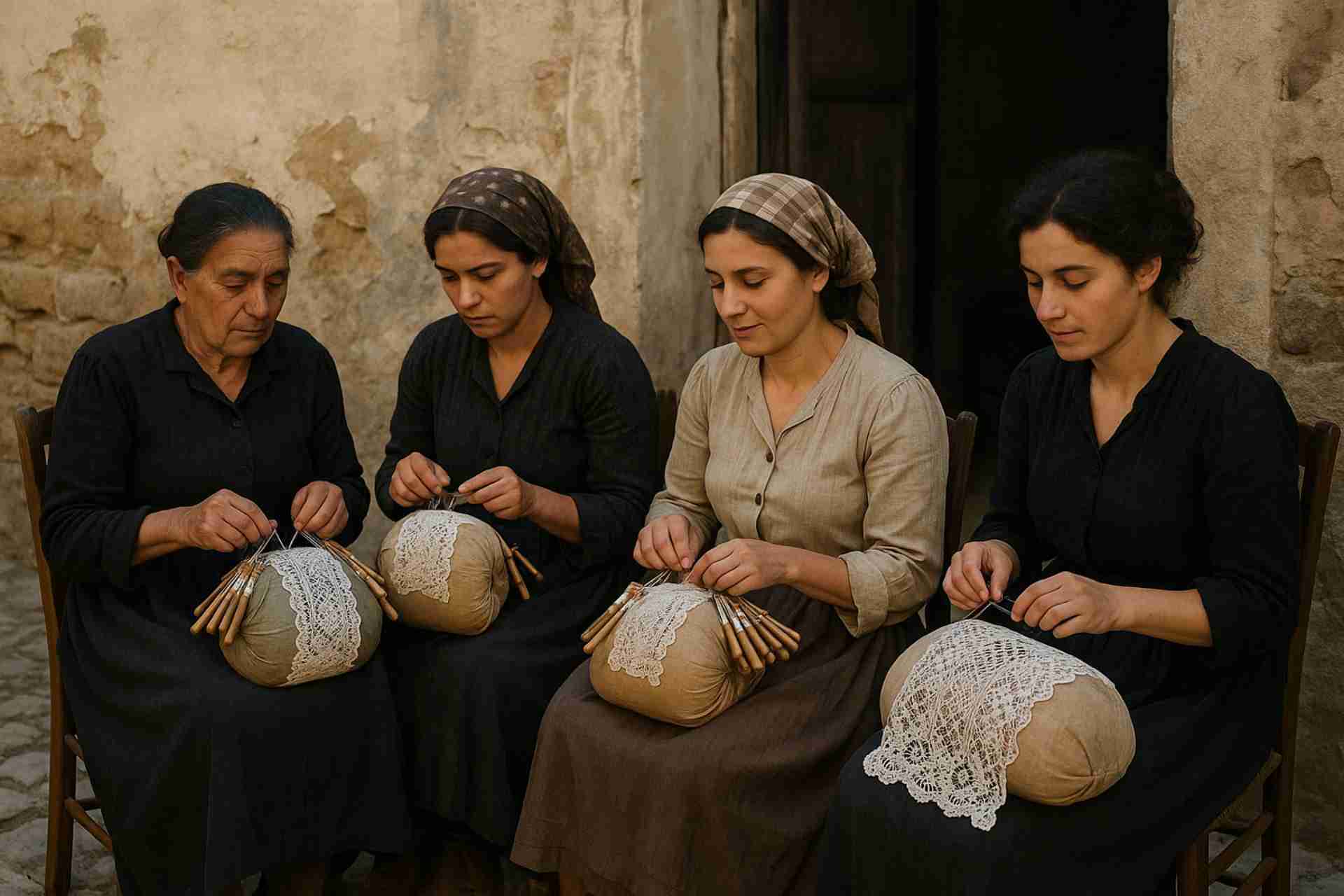
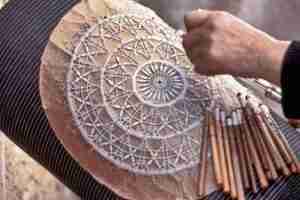
Just a few steps from the piazza stands a small but powerful institution: the Museo del Tombolo, opened in 2012. It may be young, but its soul is centuries old. Inside, you’ll find more than just lace. You’ll find evidence of memory. Wedding veils, altar cloths, baptismal gowns—all stitched by hand, by women whose names may not appear in textbooks, but whose work shaped the cultural identity of a whole region. Central to this story is Baroness Angelina Auteri, a figure both noble and radical. In 1910, she invited the Sisters of the Dorotean Order to teach tombolo embroidery to the women of Mirabella. This was no mere gesture of charity. It was a socio-economic revolution. Lace-making offered women dignity, economic agency, and—perhaps most importantly—a role in the shaping of their own history. In the museum, you might meet some of the town’s current lace-makers. Their hands move like clockwork, their eyes fixed on the threads. Teenagers and octogenarians alike gather here, not just to work—but to preserve a way of life.
Sicilian lace artisans
Lace and lunch: threads of community
At midday, history gives way to hunger. Walk down the narrow streets and stop at Trattoria da Rosina or another timeless osteria, where recipes haven’t changed since your great-grandmother’s childhood. Try pasta alla Norma, where eggplant tastes like a hymn, or salsiccia con finocchietto, fennel-scented and flame-kissed. Here, food is not just sustenance—it’s storytelling. You eat among locals who remember the baroness as if she were their own grandmother. And if you listen, you’ll hear something else: the echo of afternoons past, when women would gather in courtyards after lunch, tombolo pillows balanced on their knees. They embroidered as they shared dreams, secrets, griefs, and remedies. In Mirabella, the tempo of lace matches the tempo of life: slow, intimate, generational.
Traditional Sicilian lace-makers at work
Baroness Auteri: the thread that changed everything
No journey through Mirabella Imbaccari is complete without paying homage to its most transformative figure. Walk past Villa Auteri, a once-noble estate that pulsed with ideas far ahead of its time. Baroness Auteri didn’t just fund lessons. She rewrote the rules of power. Lace-making became more than an art—it became a currency, a path to independence, a form of quiet subversion. She introduced education through embroidery. She taught women how to read stitches like they read prayers—carefully, reverently, and with purpose. Her influence survives not only in the museum, but in every dowry drawer, every church cloth, and every grandmother’s whispered instructions to her granddaughter.
Lace shops in Mirabella Imbaccari: where the past wears sneakers
It would be a mistake to assume Mirabella is frozen in time. Visit one of the local ateliers, often hidden behind stone archways or inside aging palazzi, and you’ll find lace reimagined for today. Yes, there are delicate shawls and bridal veils. But you’ll also see lace earrings, bookmarks, even handbags with tombolo detailing stitched onto denim jackets. Young women in Mirabella speak of “tradizione remixata”—tradition remixed. They’re making lace bold, visible, and even political. Ask for a custom piece. The artisans will likely know your grandmother’s name before they finish the order. That’s the kind of place this is.

A Sicily woven in lace
Evening in the Piazza: listening to the hands
Before the sun dips too low, return to Piazza Regina Margherita. The light turns gold, then honey, then dusk. Women begin to gather again, pillows in lap, bobbins clicking like metronomes. The scent of laundry drying in the breeze blends with the last incense from evening mass. And there—perhaps—sits a girl, maybe ten years old, watching. Her eyes fixed on the hands of her nonna. There’s no screen between them. No instruction manual. Just thread, motion, correction. A whole philosophy of life. This isn’t a demonstration. It’s a transmission.
Final reflections about Mirabella Imbaccari: what a single thread can teach you
Most people don’t come to Sicily for lace. They come for beaches, ruins, cannoli. And yet, after a single day in Mirabella Imbaccari, you may find yourself haunted—not by ghosts, but by continuity. You’ll leave not with a selfie, but with a sense of something ancient and ongoing. Lace, here, is not craft. It’s worldview. It teaches you patience. Repetition. Respect for process. And most of all, it teaches that the smallest details—those we overlook—are the ones most worth preserving. Because in Mirabella Imbaccari, lace is not just decoration. It’s defiance. It’s care. It’s love, looped again and again through generations unwilling to forget.
