

Ray Liotta: the Italian-American soul behind one of Hollywood’s most intense faces
There are actors you remember for a role, and then there are actors you remember for a feeling. Ray Liotta belonged to the second category. He didn’t just play characters, he inhabited them, bringing a raw intensity that stuck with audiences long after the credits rolled. And yeah, let’s be real, the guy had that unmistakable presence, the kind that made you think, “This dude means business.”
But behind the tough-guy roles, behind “Goodfellas” and the countless performances that followed, there was something deeper. Ray Liotta carried a strong sense of identity, one shaped in part by his Italian roots. Even if his life story started with uncertainty, he never lost that connection.
A beginning marked by adoption and identity
Raymond Allen Liotta was born on December 18, 1954, in Newark, New Jersey. His story didn’t begin in a traditional way. At just six months old, he was adopted by the Liotta family, growing up alongside his sister Linda.
For years, like many adopted children, Liotta lived with questions about his origins. That sense of searching, of trying to understand where he came from, would later shape not only his personal life but also the emotional depth he brought to his roles.
Even though he was raised in an American household, Liotta became increasingly aware of his Italian heritage as he grew older. And that mattered to him. It wasn’t just a footnote in his biography. It was part of his identity, something he carried quietly but consistently.
That connection would become even more meaningful when he eventually discovered more about his biological family. And in a way, you could see that internal complexity reflected in many of his performances.

Ray Liotta in 2014
Ray Liotta Italian American identity: from humble jobs to the Miami stage
Before Hollywood came calling, Liotta’s life was far from glamorous. While studying at the University of Miami, he worked at a cemetery to pay for his courses. Yeah, not exactly the typical “actor origin story,” right?
But those years were important, they grounded him. They gave him a work ethic that would later define his career. At the University of Miami, he also began to take acting seriously, forming friendships that would open doors later on.
One of those connections, actor Steven Bauer, would prove crucial. Through Bauer’s circle, Liotta got his first real break in the industry. Like a lot of actors, he started with television, soap operas, and small roles. It wasn’t overnight success. It was a grind, but when his moment came, he didn’t waste it.
Ray Liotta Italian American identity: breaking through: “Something Wild” and early recognition
Liotta’s breakout role came in 1986 with “Something Wild”, directed by Jonathan Demme. He played Ray Sinclair, a volatile and unpredictable ex-husband, and man, he absolutely owned that role. It wasn’t just about acting angry or dangerous. He brought a psychological edge that made the character feel real, unsettling even. That performance earned him a Golden Globe nomination and put him on the map.
From that point on, Hollywood knew his name. But here’s the thing: instead of sticking to similar roles, Liotta made a deliberate choice. He didn’t want to be boxed in. He started exploring different genres, from dramas to comedies, showing early on that he wasn’t just “that intense guy.”
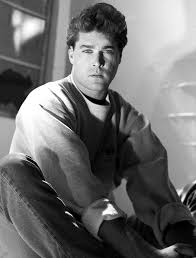
“Goodfellas”: the role that changed everything
Then came 1990, and with it, “Goodfellas”. Directed by Martin Scorsese, the film cast Liotta as Henry Hill, a character navigating the rise and fall within the American mafia.
This is where Liotta became iconic, his performance struck a balance between charm, ambition, fear, and eventual collapse. He wasn’t just playing a gangster. He was portraying a man seduced by power, then consumed by it.
Let’s be honest, “Goodfellas” didn’t just make Liotta famous. It cemented him as one of the most compelling actors of his generation.
And there’s something else worth noting. Henry Hill’s story, tied to Italian-American culture and organized crime, resonated with Liotta on a deeper level. It wasn’t just acting. There was an authenticity there, a sense of familiarity with the cultural backdrop.
After “Goodfellas”, it would have been easy, even expected, for Liotta to keep playing mobsters or criminals. But nope, that wasn’t his style.
Instead, he chose variety. He played:
- A troubled cop;
- A grieving widower;
- A rebellious soldier.
He moved through roles in films like: “Field of Dreams”, “Unlawful Entry”, and “No Escape”, proving he had range. This decision might have limited his mainstream visibility at times, but it also preserved his credibility as an actor. He wasn’t chasing fame. He was building a body of work. And honestly, that’s something you don’t see every day.
Ray Liotta Italian American identity: a career that kept evolving
Even though his peak popularity came in the early 1990s, Liotta never disappeared. He continued working steadily, collaborating with major directors like Ridley Scott in Hannibal and appearing in films like “Blow”.
He also wasn’t afraid to explore unconventional projects, one of the most unexpected but iconic roles? Voicing Tommy Vercetti in “Grand Theft Auto: Vice City”.
Yeah, if you know, you know. That performance introduced him to an entirely new generation, showing that his voice alone carried that same intensity and charisma. He even appeared in animated form in “Bee Movie” and participated in various multimedia projects. Liotta adapted. He didn’t get stuck in the past.
Ray Liotta Italian American identity: a quiet but meaningful connection
Ray Liotta’s relationship with his Italian heritage was never something he turned into a spectacle or a defining label to showcase publicly, yet it remained a constant, almost silent presence throughout his life and career. Unlike many actors who lean into cultural identity as a recognizable trait, Liotta approached his origins with a kind of restraint that made them feel more authentic and less constructed.
His connection to Italy was not built on external symbols or exaggerated mannerisms, but on an internal awareness that subtly shaped his perspective and, over time, his artistic choices.
This quiet relationship with his roots becomes even more interesting when considering his personal history, marked by adoption and a later discovery of his biological background.
The awareness of belonging to two different narratives, one lived and one discovered, created a layered identity that resonated with many Italian-American experiences, where heritage and upbringing do not always perfectly overlap. Rather than resolving this tension, Liotta seemed to embrace it, allowing that complexity to inform the way he inhabited his characters, especially those situated within culturally specific environments.
When he portrayed Italian-American figures, particularly in films connected to crime or family dynamics, his performances carried a sense of familiarity that did not rely on imitation. There was no need for overt accents or theatrical gestures, because his understanding of that cultural space appeared instinctive. He moved within it naturally, as if he recognized its rhythms rather than studied them. This is what distinguished him from many contemporaries, whose interpretations sometimes leaned toward stylization.
At a broader level, his life reflects a recurring theme within Italian-American identity: the negotiation between inherited culture and lived experience. For many individuals, especially those raised outside a strictly traditional context, identity is not a fixed point but an evolving process. Liotta’s trajectory mirrors this condition, showing how heritage can exist as a quiet influence rather than an explicit declaration.
Private life: a reserved presence behind an intense persona
Ray Liotta’s private life stood in clear contrast to the intensity that defined many of his on-screen roles, revealing a personality that was far more reserved and grounded than audiences might have expected. He was not someone who actively sought media attention or public exposure, and throughout his career he maintained a careful separation between his professional image and his personal world. In 1997, he married producer Michelle Grace, whom he met in a casual setting that reflected his preference for normalcy over spectacle, and together they had a daughter, Karsen, in 1998.
Although the marriage ended in divorce in 2004, Liotta remained closely connected to his daughter, often describing fatherhood as one of the most meaningful aspects of his life. This role seemed to anchor him, offering stability beyond the unpredictability of the entertainment industry. In the years that followed, he had relationships with actress Catherine Hickland and later became engaged to Jacy Nittolo, yet he continued to keep these experiences largely out of the public spotlight.
Those who worked with him often described him as focused, respectful, and introspective, qualities that contrast sharply with the volatile characters he frequently portrayed. This balance between public intensity and private discretion contributed to the sense that, beyond the screen, Liotta was a man who valued authenticity and personal boundaries above visibility.
A quiet farewell and a legacy carried forward
Ray Liotta’s final chapter carries a quiet emotional weight that feels consistent with the way he lived, without spectacle, without excess, but with a presence that continues even after his passing. He died on May 26, 2022, in Santo Domingo, where he was working on the film “Dangerous Waters”, and the news arrived suddenly, leaving both the industry and audiences with the sense of losing someone, who was still fully active, still engaged, still capable of delivering new performances. His death, caused by pulmonary edema and acute heart failure, did not come after a long public illness, and this made it feel even more abrupt, almost unreal, as if a voice that had never faded simply stopped mid-sentence.
In the months that followed, tributes continued to highlight not only his talent but also his character, emphasizing the contrast between the intensity of his roles and the grounded nature of the man behind them. This sense of continuity between his work and his legacy became particularly visible in February 2023, when his daughter Karsen accepted his star on the Hollywood Walk of Fame, a moment that transformed a public recognition into something deeply personal and intimate.
Standing alongside his former co-stars Elizabeth Banks and Taron Egerton, Karsen spoke of her father with a simplicity that reflected the way he had chosen to live, saying she felt proud to receive the honor on his behalf and describing him as a unique actor and an irreplaceable presence in the lives of those who knew him. Her words, especially the idea that everyone deserves a Ray in their life, captured something essential about him, suggesting that his legacy is not limited to cinema but extends to the relationships he built and the impression he left on others.
