
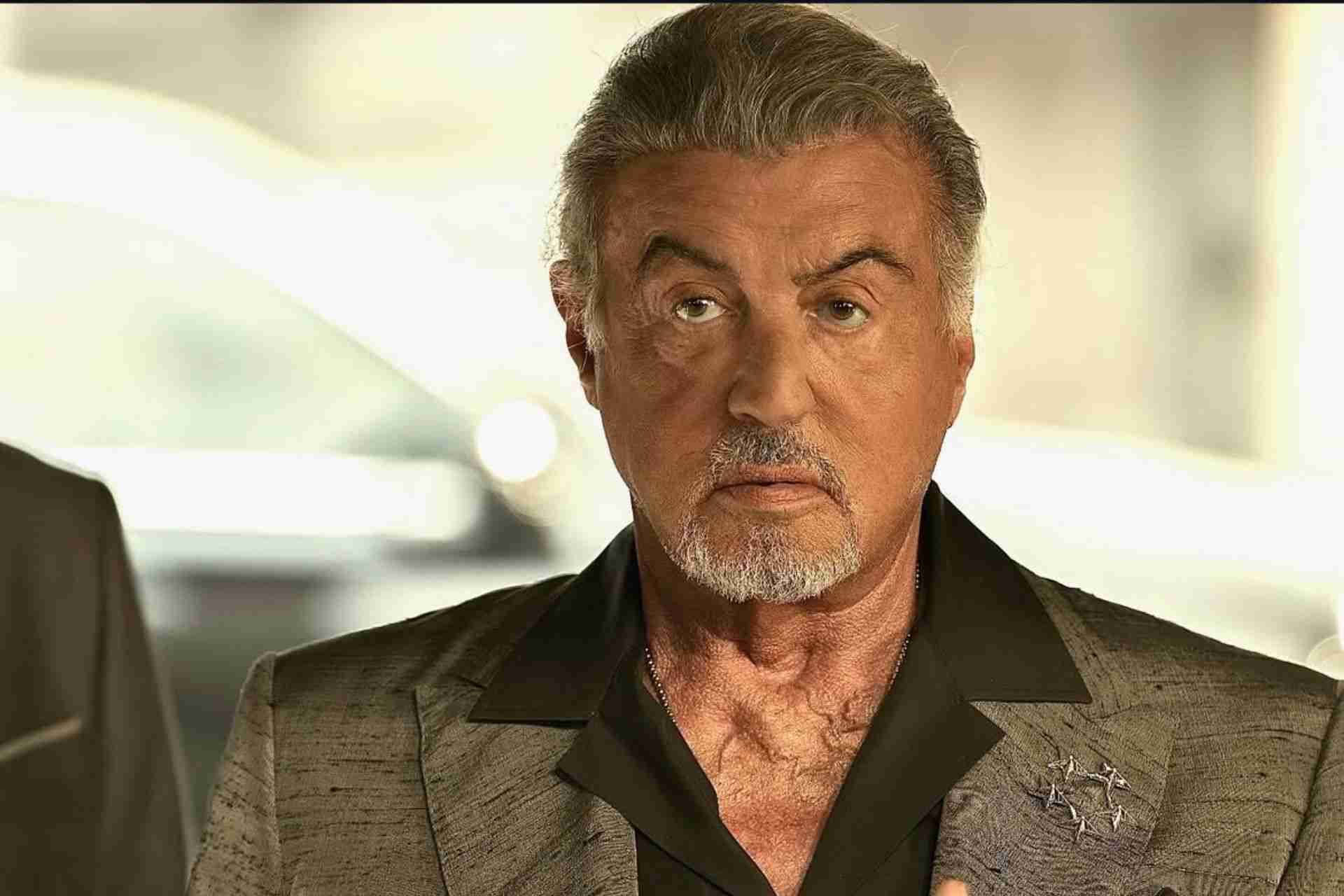
Sylvester Stallone Italian roots.
Critics laughed at him — Italy never did: why Sylvester Stallone is more than just Rocky
There are names that echo beyond cinema screens—names that muscle their way into history not because they were perfect, but because they were real. Sylvester Stallone, born on July 6, 1946, isn’t simply an actor. He is a myth carved from concrete and spirit, a symbol of resilience shaped by struggle. For Americans who cradle a love for Italy in their chests, Stallone is not just a Hollywood icon—he is a living thread of Italian ancestry, stitched into the rugged tapestry of American storytelling.
And since his birthday falls this month, we take this moment to celebrate not just the man, but the legacy—Italian in soul, American in fight—that he continues to build with every breath, every frame, every round.
Sylvester Stallone Italian roots: a birth written in two languages
He was born Michael Sylvester Gardenzio Stallone in Hell’s Kitchen, New York—a neighborhood that didn’t forgive softness and didn’t reward silence. His mother, Jacqueline Labofish, was of French and Ukrainian descent, but it was from his father, Francesco “Frank” Stallone Sr., that the Mediterranean blood pulsed strongest. Frank hailed from Gioia del Colle, a modest Apulian town in southern Italy. There, the earth is baked by the sun and tempered by wind. That land—harsh, warm, enduring—shaped the man who would one day father Rocky Balboa.
As a child, Sylvester’s early years were marred by complications—forceps damaged the nerves in his face during birth, leaving his signature slurred speech and drooping gaze. A flaw, the world called it. But flaw became feature. Weakness became signature. And in that transformation lies the very essence of Stallone’s legacy.
Rocky: A monument of flesh and hope
When Rocky hit the screens in 1976, America saw a boxer. But Italian Americans saw a mirror. A man of few words who spoke volumes with his fists. Stallone didn’t just act in it—he wrote it. In three days, he poured into the script the hunger of every man who had ever been overlooked, passed by, or counted out. He refused to sell the screenplay unless he could play the lead, despite producers offering hefty sums for the rights. That refusal wasn’t pride. It was destiny insisting on truth.
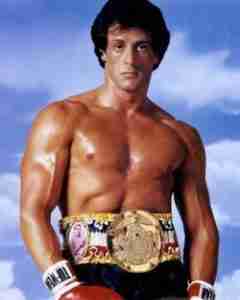
Rocky Balboa
Rocky was nominated for ten Academy Awards. It won Best Picture, and Stallone—bare-knuckled, untrained, tenacious—became a symbol of a dream that would not die. His portrayal of Rocky Balboa is more than a performance. It is an American sonnet composed in sweat, bruises, and faith.
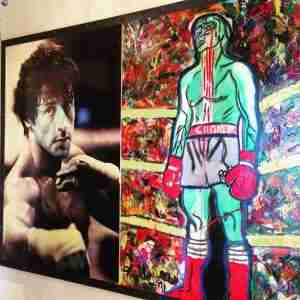
A painting by Stallone inspired by Rocky Balboa
Sylvester Stallone Italian roots: Italian legacy, American triumph
Italians speak of fortezza interiore—the strength that does not roar but holds. Stallone’s life is drenched in that ethos. He never denied his roots. He carried them. Honored them. In Rocky, in Rambo, in Cop Land, and Creed, there are echoes of southern Italy’s men: tough, stubborn, loyal, capable of unspeakable tenderness beneath hardened skin.
Even as the flashier Hollywood stars basked in glamour, Stallone returned to the gym, to the typewriter, to the edge of pain. His films aren’t just about violence. They are about survival. About the man who takes a hit and still rises. About identity forged not in luxury, but in fire.
Rambo: the wound that refused to close
Before he became a symbol etched on T-shirts and misunderstood in sequels, John Rambo was a scar—walking, breathing, aching. First Blood (1982) was not born to glorify violence, but to expose its residue. Through Rambo, Stallone didn’t portray a warrior. He portrayed what war leaves behind: a man estranged from peace, punished not for what he did, but for what he survived.
He is not Rocky’s cousin. He is his shadow.
If Rocky runs up stairs, Rambo runs from ghosts. If Rocky seeks belonging, Rambo has already been forgotten. And yet, in this forgottenness, Stallone shaped one of his most poignant legacies: a portrait of the American veteran as exile, wandering through the same streets he once believed he defended. Dirty, hunted, broken—but still refusing to die.
Italian Americans, immigrants, and sons of silence saw something familiar in Rambo’s eyes. A man who says little, trusts no one, and shoulders memory like a cross. Stallone gave trauma a name and filmed it moving through forests, dodging bullets, trying to breathe. He didn’t glamorize the wound. He made it human.
In Rambo, we are reminded that survival is not a finish line—it’s a sentence. But it is also, paradoxically, a form of resistance. To live with pain and still keep walking. To be haunted and still hold the line. That is the Stallone signature: not invincibility, but endurance. Not heroes, but men.
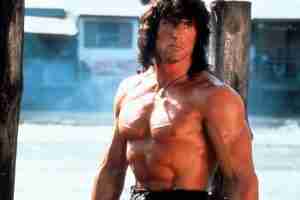
Stallone as Rambo: a portrait of trauma, survival, and silent defiance
Sylvester Stallone Italian roots. The price of grit: criticism and stigma
It would be convenient to remember only the triumphs. But Stallone’s journey was riddled with disdain from critics who dismissed him as a “muscleman without depth.” For years, he was branded as one-dimensional, a cinematic brute trapped in an endless loop of action sequels. The media rarely granted him nuance. He was mimicked, mocked, flattened into parody. What they missed was the quiet intelligence beneath the brawn—the screenwriter with an ear for underdogs, the director who shaped myth from pain. There was stigma, too: against his speech, his physique, his relentless self-reinvention. But Stallone didn’t shout back. He worked. And with each film, each script, each reappearance when they thought he was finished, he dismantled the prejudice, not with anger, but with endurance. He didn’t need to defend his talent—his longevity did it for him. He stayed in the ring long after others left, and in doing so, taught us that dignity does not come from approval, but from persistence.
Sylvester Stallone Italian roots. Aging in public, standing unshaken
Stallone aged before our eyes, and refused to hide it. His wrinkles were not smoothed. His body, though disciplined, bore the marks of time. In Creed, he let Rocky grow old. He let him suffer, mentor, grieve. There was no mask. There was only life. In doing so, he taught generations of American and Italian descendants alike that masculinity is not the absence of pain, but the bearing of it with grace. And so each July, as his birthday returns, Stallone doesn’t merely add a year—he adds a layer to a legacy. A legacy that began in Apulia, passed through New York’s asphalt, and ascended the stairs of the Philadelphia Museum of Art with fists raised not in victory, but in defiance of despair.
The Silence between his words
Like a page from an Italian epic, Stallone’s career has verses of action, pauses of reflection, and always, the whisper of ancestry in the background. He did not forget the dialects of his heritage, even as his fame crossed oceans. In 1990, he returned to Gioia del Colle, where streets narrow like secrets and old men still sit in the shade. He didn’t arrive as a celebrity. He arrived as a son. To many Italian Americans, Stallone remains a mythical hybrid—half modern titan, half ancestral echo. And that duality makes him unforgettable. Not because he shouts louder, but because, what’s good for the characters is not what’s good for the reader. Stallone’s roles don’t coddle. They challenge. They ask you to carry pain and keep going.

Stallone with his artwork
Sylvester Stallone Italian roots. The man off screen: lifestyle and lesser-known trivia
When he’s not scripting redemption arcs or transforming into aging warriors, Stallone lives by rhythms most wouldn’t expect. He’s a devoted early riser, often beginning his day before dawn with a strict workout—still lifting, still punching the air, as if every sunrise might demand one more round. Despite his tough guy persona, he is deeply domestic—a lover of painting, literature, and family dinners. He drinks his coffee black, but his art is vibrant—his canvases an explosion of red, blue, and rage, with exhibitions hosted across Europe.
A lifelong lover of horses and cigars, Stallone has named some of his characters after family members and even pets. In fact, his loyal bullmastiff Butkus, featured in Rocky, was once sold during a period of financial hardship—then repurchased after the film’s success. He often refers to this moment as “the clearest proof that love can be lost and redeemed”. Few know that Stallone turned down major roles in Beverly Hills Cop and Terminator, or that he studied drama in Switzerland before hitting it big.
And though wealth and stardom surround him, Stallone has never fully abandoned the underdog. He supports numerous charities, including those helping veterans and children with autism. His life, lived loudly, still protects pockets of quiet conviction—where old-country values meet modern ambition.

Stallone’s self-portrait
Conclusion: Stallone, the bridge
For those who cherish Italy, and those who believe in the promise of America, Sylvester Stallone is more than an icon—he is a bridge. A living conduit between old-world roots and new-world dreams. He reminds us that greatness is not inherited, but earned—not from comfort, but from concrete and grit. That a boy born with broken speech and crooked features can rise, not in spite of his flaws, but because of them.
And in his voice—half Bronx, half southern Italy—we hear not just the roar of Hollywood, but the heartbeat of a people who have always fought to be seen.
So this July, as we mark his birthday, let’s do more than remember his movies.
Let’s raise a glass to resilience.
To heritage.
To the underdog who never stayed down.
Buon compleanno, Sly!
America made you a star.
But Italy made you unforgettable.
