
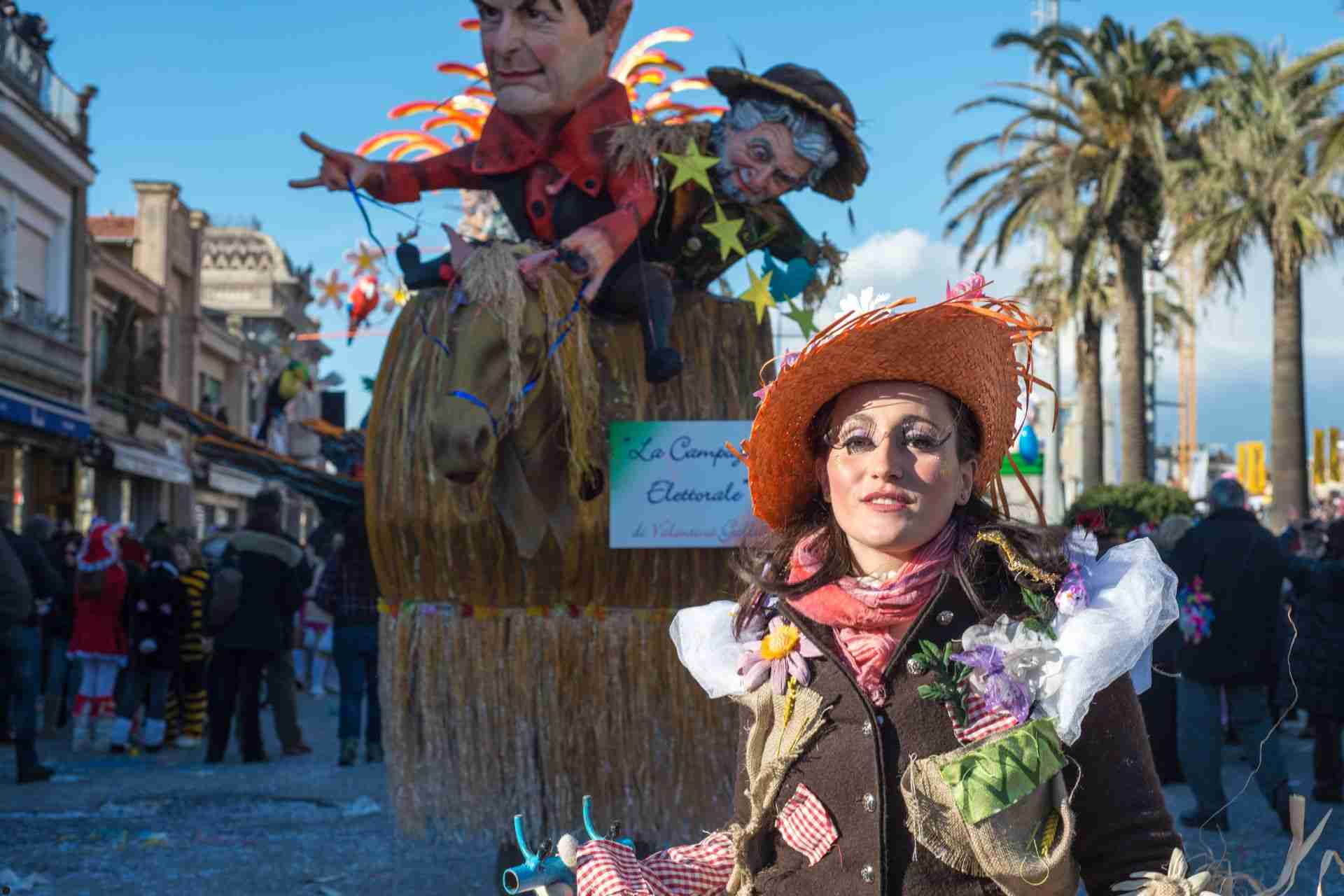
Carnival in Italy: a timeless celebration
Italy, a country renowned for its deep cultural roots and artistic grandeur, hosts one of the most vibrant and historically rich celebrations in the world: Carnival. As the weeks leading up to Lent unfold, Italy bursts into a dazzling spectacle of masks, costumes, and unrestrained festivity. From the opulent streets of Venice, where masked figures glide through canals, to the wild Battle of Oranges in Ivrea, every region adds its own twist to this centuries-old celebration. The air hums with music, the streets fill with laughter, and for a moment, reality takes a backseat to fantasy.
Carnival in Italy: a journey through time
Long before the Venetian canals echoed with the sounds of masked revelers, the spirit of Carnival had already taken root in ancient Rome. The raucous celebrations of Saturnalia, honoring the god Saturn, allowed societal norms to be momentarily suspended in favor of feasting and merrymaking. But it was the Christian influence of the Middle Ages and Renaissance that shaped the Carnival we know today. The very name “Carnevale” is thought to originate from “carne vale,” meaning “farewell to meat,” marking the final days of indulgence before the solemnity of Lent.
Carnival in Italy: the enchantment of masks and costumes
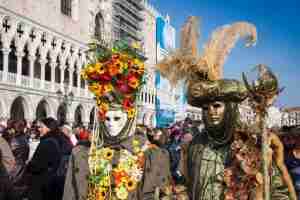
Nothing defines Italian Carnival quite like its extravagant masks and elaborate costumes. In Venice, anonymity is key. A mask can transform anyone into a noble, a rogue, or a mysterious stranger. The Bauta, a stark white mask with a pronounced nose, paired with a black cape and tricorn hat, grants an air of mystery. The Moretta, a delicate black velvet mask, was once favored by women, requiring them to bite down on a button to keep it in place, rendering them silent. Then there’s the Colombina, adorned with intricate gold and silver details, adding a touch of theatricality. But perhaps the most iconic of all is the Medico della Peste, or Plague Doctor, with its long, haunting beak—once a tool of physicians, now an unmistakable symbol of Carnival’s theatrical spirit.
Carnival in Italy: Italy’s most spectacular Carnival celebrations
Venice is the crown jewel of Italian Carnival, where Piazza San Marco transforms into a dreamlike stage of lavish gowns, powdered wigs, and grand processions. The festival’s highlight, the Flight of the Angel, sees a daring performer descend gracefully from the bell tower of St. Mark’s Basilica, enchanting thousands of spectators below. But for those seeking a different kind of revelry, Viareggio on the Tuscan coast offers something grander and bolder. Towering papier-mâché floats, often satirical in nature, parade through the streets, lampooning politicians, celebrities, and social issues in a dazzling fusion of humor and artistry. In northern Italy, the town of Ivrea hosts one of the most exhilarating and unconventional events of all: the Battle of the Oranges. It’s a chaotic, citrus-scented battlefield where thousands engage in an all-out fruit war, reenacting a medieval rebellion. The air is thick with the scent of oranges, and the spectacle is both exhilarating and deeply rooted in local history. For a touch of international flair, Cento brings a unique Brazilian twist to its Carnival, thanks to a collaboration with the Rio de Janeiro Carnival. Expect pulsating samba rhythms, extravagant costumes, and an energy that fuses the best of Italian and Brazilian traditions. And then, there’s Acireale, Sicily’s baroque masterpiece of a Carnival. Here, intricately designed flower-covered floats roll through the streets, blending floral artistry with the lively pulse of Sicilian music and dance.
Carnival in Italy: the irresistible flavors of Carnival
No Italian festival would be complete without a feast, and Carnival is the epitome of indulgence. The air is thick with the scent of frying pastries, as vendors sell chiacchiere, crispy golden ribbons of fried dough dusted with powdered sugar, known by different names across Italy. Castagnole, bite-sized balls of fried dough, sometimes filled with custard or chocolate, offer a delightful crunch. In Venice, the undisputed star is frittelle, sweet fritters bursting with raisins, cream, or zabaglione.
Each bite is a taste of pure decadence, a final indulgence before the austerity of Lent.
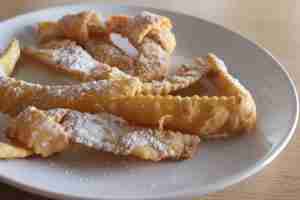
Chiacchiere
Carnival in Italy 2025: when and what to expect
Carnival in 2025 promises to be as mesmerizing as ever, with festivities set to begin in early February and culminating on Martedì Grasso (Fat Tuesday) on March 4, 2025. As always, Venice will take center stage with its opulent masked balls and theatrical performances, while Viareggio will unleash its towering floats, brimming with political satire and creative brilliance. Ivrea’s Battle of the Oranges is expected to draw thousands of enthusiastic participants ready to relive the town’s legendary medieval rebellion in a spectacularly juicy showdown. In addition to the traditional events, 2025 will introduce some exciting new features. Venice is rumored to be hosting an extended light show along the Grand Canal, adding an extra layer of magic to the already enchanting cityscape. Meanwhile, Cento is set to welcome new international artists, further enhancing its fusion of Brazilian and Italian Carnival influences. It will be a year of fresh surprises while maintaining the essence of Italy’s most beloved winter celebration.

Castagnole
Carnival in Italy: trivia and fun facts you didn’t know
Carnival in Italy is filled with fascinating curiosities. Did you know that Venetian masks were once worn not just during Carnival but for months at a time? In the 18th century, they became part of everyday life, allowing nobles and commoners alike to move through the city unnoticed. Another intriguing fact: the tradition of throwing oranges in Ivrea actually replaced an older, more dangerous custom where revelers hurled stones. Over time, the switch to citrus fruit created a thrilling yet less harmful battle. And for those wondering about the origins of Viareggio’s grand floats, the first ones were crafted in 1873 using simple wood and iron. Today, the floats are technological marvels, animated and towering over the crowds in a display of artistic mastery. Carnival in Italy is more than just a festival—it’s a vibrant testament to history, creativity, and the enduring power of celebration. With each passing year, it continues to captivate the imagination, ensuring that its magic never fades.
The soul of Carnival: a celebration of freedom and fantasy
Beyond the parades, the masks, and the sweets, Carnival is a grand celebration of freedom, creativity, and unbridled joy. It is a moment where the ordinary dissolves, and the extraordinary takes center stage. For a few precious days, social barriers fade, and the streets become a theater where history, art, and imagination collide. Whether you find yourself wandering through the misty alleyways of Venice, dodging oranges in Ivrea, or dancing to samba beats in Cento, the magic of Carnival is impossible to resist. It is a festival that, year after year, reminds us of the beauty of revelry, the power of tradition, and the joy of letting go.
