
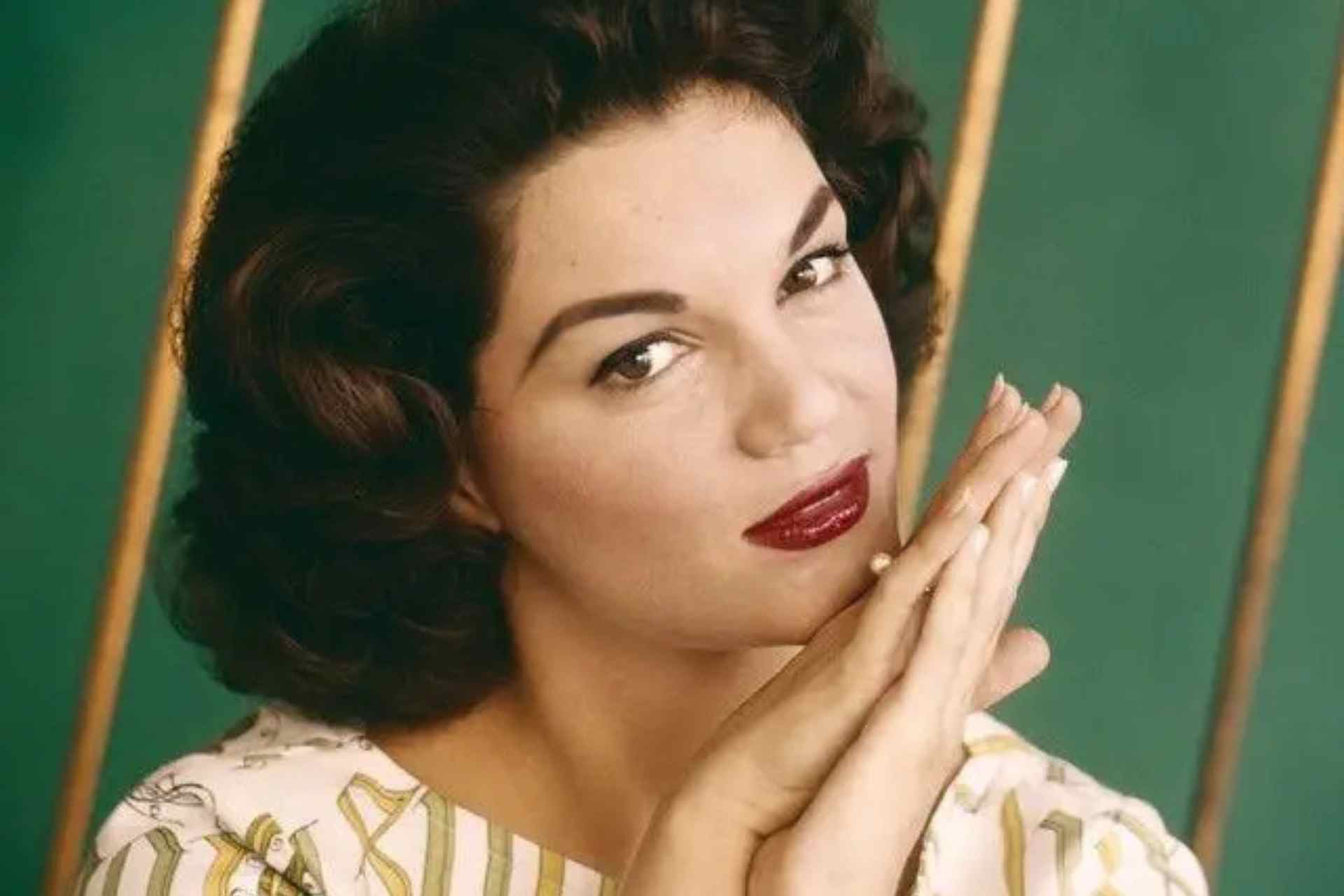
Connie Francis: The Italian-American Voice That Crossed Oceans and Generations
Connie Francis was born Concetta Rosa Maria Franconero in Newark, New Jersey, in 1937, into a working-class Italian-American family whose roots traced back to southern Italy.
Her upbringing reflected a familiar pattern in immigrant households of the time: discipline, ambition, and a deep sense of cultural identity. Her father, George Franconero, played a decisive role in shaping her path. He believed in her talent early on and pushed her relentlessly toward a career in entertainment, a decision that would define her entire life trajectory.
From a very young age, Connie was immersed in music. She learned to play the accordion and performed at local events, talent shows, and television programs. It wasn’t just a hobby. It was training, almost a form of apprenticeship. The Italian household she grew up in was filled with melody, tradition, and a certain emotional intensity that would later become her trademark. That blend of discipline and expressive depth would prove essential in an industry that often demanded both resilience and vulnerability.
By her teenage years, she had already appeared on television and was gaining modest recognition. However, success did not come immediately. The early years were marked by rejections and uncertainty, a reality many young performers face.
Yet Connie’s determination, reinforced by her family’s expectations, kept her moving forward. She wasn’t just chasing fame. She was trying to carve out a space where her voice, shaped by her heritage and personal experiences, could be heard.
Looking back, those formative years in Newark were not just a prelude. They were the foundation. The tight-knit Italian-American community, the pressure to succeed, and the early exposure to performance all contributed to building an artist who would later resonate with audiences far beyond the United States. In many ways, Connie Francis was already carrying a dual identity before she even became famous: American in opportunity, Italian in soul.

Connie Francis
Connie Francis’ Italian Roots and Identity: More Than Just Heritage
To understand Connie Francis, you have to understand the weight and richness of her Italian heritage. This was not a superficial label or a marketing angle. It was a lived reality that shaped her voice, her emotional range, and even her career choices. Growing up in an Italian-American family meant being surrounded by traditions, language, and a very specific way of expressing feelings. There was intensity, a kind of unapologetic emotional openness that would later define her music.
Her connection to Italy was not just symbolic, Connie recorded songs in multiple languages, including Italian, and became one of the first American artists to actively embrace an international audience. She understood early on that music could travel across borders, and she leaned into that idea. At a time when many artists focused primarily on the American market, she expanded her reach into Europe, Latin America, and beyond.
Italian music traditions, especially those rooted in melodrama and storytelling, influenced her vocal style. Her performances often carried a sense of longing, nostalgia, and emotional clarity that resonated with listeners from different backgrounds. It wasn’t about technical perfection alone. It was about conveying something real. And let’s be honest, she knew how to hit you right in the feels.
Her identity also placed her within a broader narrative of Italian-American success stories in the 20th century. Like many others, she navigated the balance between assimilation and cultural preservation. She was fully American in her career and public persona, yet she never detached from her roots. That duality became part of her appeal. Audiences saw in her both familiarity and authenticity.
In a way, Connie Francis helped redefine what it meant to be an Italian-American artist. She didn’t hide her background, nor did she let it limit her. Instead, she used it as a bridge, connecting different audiences through a shared emotional language.
The breakthrough: chart-topping success and global fame
Connie Francis’s rise to fame did not happen overnight, but when it did, it was nothing short of explosive. Her breakthrough came in 1958 with the song “Who’s Sorry Now?”, a track that initially struggled to gain traction. It was only after being featured on national television that the song began to climb the charts, eventually becoming a major hit. From that moment on, everything changed. She went from being a struggling performer to one of the most recognizable voices in pop music.
The late 1950s and early 1960s marked the peak of her commercial success. She released a string of hits, including “Stupid Cupid,” “Lipstick on Your Collar,” and “Where the Boys Are.” These songs captured the spirit of the era while also showcasing her versatility. She could move effortlessly between upbeat tracks and more emotional ballads, a skill that broadened her audience and solidified her position in the industry.
What set Connie apart was not just her voice, but her adaptability. She recorded songs in multiple languages and tailored her releases for different markets. This approach allowed her to achieve international success at a time when global distribution was far more complex than it is today. She became a household name not only in the United States but also in Europe, Asia, and Latin America.
Her success also extended to film. She starred in movies such as “Where the Boys Are,” which further increased her visibility and influence. The film’s title track became another hit, reinforcing the connection between her music and popular culture.
She was a multimedia presence, something that feels very modern when you think about it.
Despite the pressures of fame, Connie maintained a strong work ethic. She continued to record, perform, and expand her repertoire. Her career during this period can be described as relentless, but also incredibly effective. She understood the industry and knew how to navigate it.
Connie Francis’ personal Life: between success and struggle
Behind the public image of a successful artist, Connie Francis’s personal life was marked by significant challenges. Her relationships, in particular, were often complicated and sometimes painful. One of the most well-known aspects of her private life was her relationship with singer Bobby Darin, which was reportedly opposed by her father. That opposition ultimately led to their separation, a decision that had a lasting emotional impact on her.
Her life also included periods of trauma and hardship that deeply affected her mental health. In the 1970s, she experienced a violent assault that had long-term consequences, both personally and professionally. This event, along with other difficulties, contributed to periods of depression and withdrawal from the public eye. It’s a reminder that behind the glamour of the entertainment industry, there are often stories of vulnerability and resilience.
Despite these challenges, Connie did not disappear. She sought help, underwent therapy, and gradually returned to performing. Her openness about her struggles, particularly regarding mental health, was ahead of its time. She spoke publicly about issues that were often stigmatized, helping to raise awareness and reduce shame around them. In doing so, she extended her influence beyond music.
Her personal life also included multiple marriages, none of which lasted long-term. These experiences, while difficult, added another layer to her public persona. She was not just an artist singing about love and heartbreak. She had lived those emotions in very real ways. That authenticity made her music resonate even more deeply with her audience.
Connie Francis’ legacy and Influence in modern music
Connie Francis’s impact on the music industry extends far beyond her chart-topping hits. She was one of the first female artists to achieve sustained international success, paving the way for future generations. Her willingness to record in multiple languages and engage with diverse audiences set a precedent that many artists would later follow.
Her influence can be seen in the careers of numerous singers who came after her. The emotional clarity of her performances, combined with her technical skill, created a model that others have tried to emulate. She showed that it was possible to be both commercially successful and artistically expressive, a balance that is not always easy to maintain.
Her recordings continue to be reissued, and her songs are still played on radio stations and streaming platforms. This enduring presence speaks to the timeless quality of her music. While musical trends have changed dramatically over the decades, her work has managed to remain relevant.
In addition to her musical legacy, Connie’s contributions to discussions mental health have also left a lasting mark. By speaking openly about her experiences, she helped to challenge stigma and encourage others to seek help. This aspect of her legacy is perhaps less visible but equally important.
She also represents a specific moment in American cultural history, one in which Italian-American artists were gaining visibility and recognition. Her success contributed to a broader acceptance and appreciation of diverse cultural backgrounds within the entertainment industry. She didn’t just follow trends. She helped shape them.
Final thoughts: beyond fame, a human story
There is something about Connie Francis that goes beyond charts, awards, and historical significance. It’s the way her story unfolds, with all its contradictions, strengths, and fragilities. Connie Francis passed away on July 16, 2025, in Pompano Beach, Florida, at the age of 87, a voice that had recently found new resonance with younger generations. She represents a generation of artists who built their careers without the safety nets we often take for granted today.
What makes her particularly compelling is the coexistence of success and vulnerability. She reached extraordinary heights in her career, yet she also faced moments of profound difficulty. Instead of defining her solely by either aspect, it’s more accurate to see her as a combination of both. That complexity is what makes her story resonate.
From a more personal perspective, there is also a sense of admiration for her persistence. She did not disappear after her struggles. She found ways to continue, to adapt, and to reconnect with her audience. That resilience is not always visible in headlines, but it is essential to understanding her legacy.
Connie Francis also reminds us of the importance of cultural identity. Her Italian roots were not just a background detail. They were an integral part of who she was and how she expressed herself. In a world that often pushes for uniformity, she maintained a connection to her origins without letting them confine her.
In the end, what remains is not just a collection of songs, but a human story. One that includes ambition, love, loss, recovery, and continuity. And maybe that’s the real reason she still matters. Not just because she was successful, but because she was real.
