
The history of Italy’s most beautiful seafront promenades
Italy’s love affair with the sea is nothing new. Long before stylish tourists strutted along palm-lined promenades in flip-flops and sunglasses, the Romans had already paved the way—literally. Ancient coastal roads, such as the Via Aurelia and Via Flaminia, hugged the coastline, connecting settlements and military outposts from Liguria down to Campania and Calabria. These roads weren’t designed for leisure walks, of course. They were pragmatic, engineered marvels. But their legacy lives on in the layout of many of today’s lungomare —seafront walkways that have evolved into cultural and architectural showpieces. By the late 18th and 19th centuries, as Italy became a popular destination for European aristocrats on the Grand Tour, the idea of strolling along the coast transformed from practical travel to a fashionable pastime. Cities and towns began investing in wide promenades where the elite could “take the air” and show off their Sunday best. The idea of a passeggiata—a slow, scenic walk often at sunset—was born, and it never really went out of style. In fact, the lungomare is not just a sidewalk by the sea. It’s a stage. It’s where people flirt, chat, jog, walk dogs, eat gelato, and contemplate life with the sound of waves as a soundtrack. It’s deeply embedded in Italian lifestyle and identity. But each one also has a unique story, born from the local history, politics, and architecture of its town or region.

Italy’s most beautiful seafront promenades – Naples’ Lungomare Caracciolo: beauty in resilience
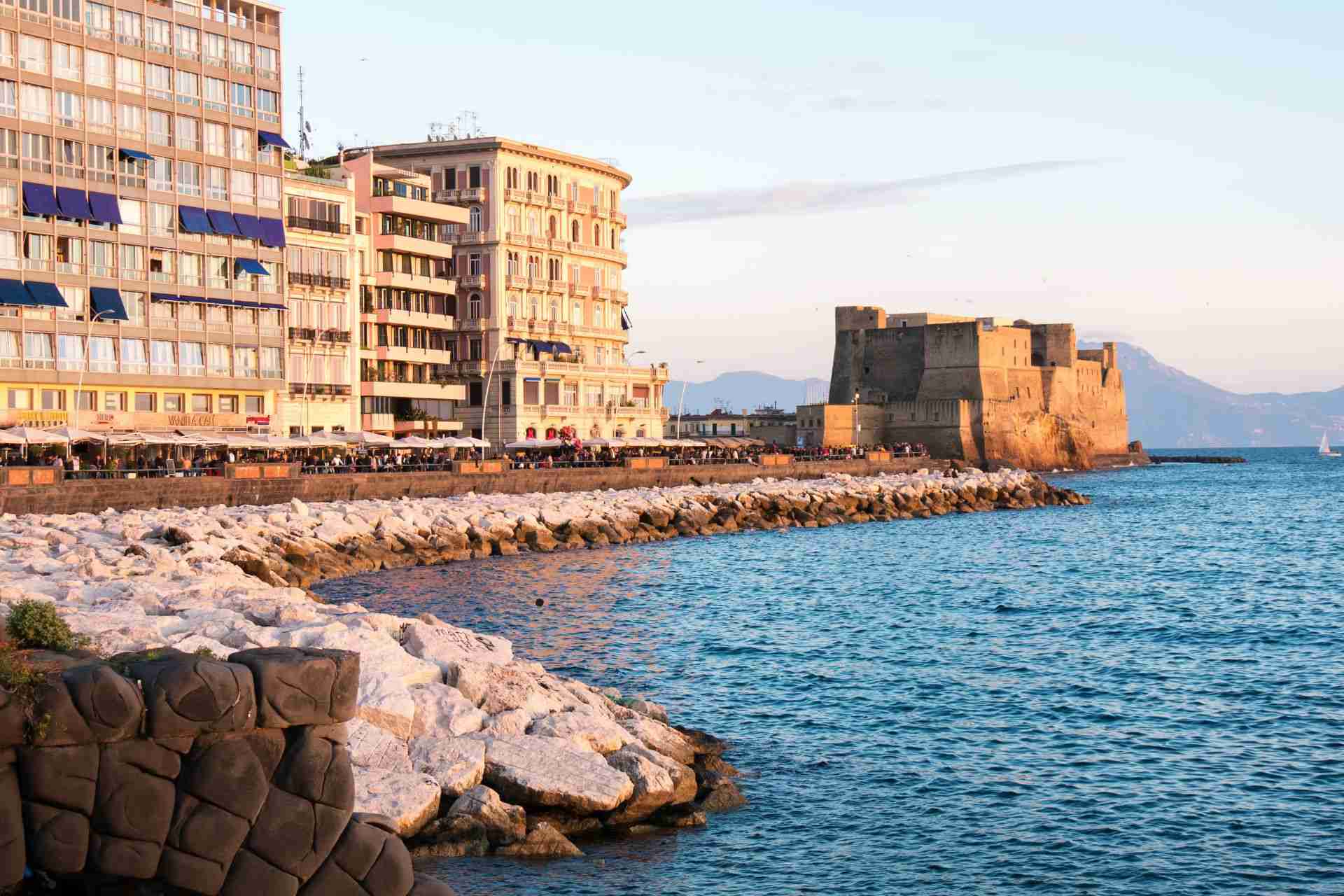
Let’s start with Naples. If you’ve ever been to Lungomare Caracciolo, you know the vibe—it’s got old-school glam, the smell of fresh sfogliatella in the air, and Mount Vesuvius looming in the background like a sleeping god. Named after Admiral Francesco Caracciolo, this waterfront stretch is both postcard-perfect and historically layered. The modern promenade dates back to the early 20th century, though the coastline was inhabited and celebrated centuries earlier. During the Bourbon period, much of Naples’ coastline was reclaimed and urbanized, particularly in the Chiaia and Mergellina areas. But it wasn’t until the Fascist era that the Lungomare Caracciolo really took shape as a grand public space. Today, this stretch of seafront tells a story of resilience. It’s where Neapolitans celebrated after the city’s liberation in WWII, and where anti-mafia marches took place in the 1990s. More recently, the Lungomare has been pedestrianized, giving it a second life as one of the most chill, traffic-free zones in all of Italy. And don’t even get us started on how romantic it gets during sunset—chef’s kiss.

Francesco Caracciolo
Rimini and the birth of seaside leisure
If you’re talking lungomare, you can’t skip Rimini. This Adriatic resort town basically wrote the playbook for beachside tourism in Italy. Its lungomare isn’t just a walkway—it’s a timeline of how Italians learned to love the beach. Back in the mid-1800s, Rimini was still a sleepy port town. Then came the boom of bagni pubblici—public bathhouses and beach huts. By the early 1900s, Rimini had transformed into a playground for the upper class. Art Nouveau hotels popped up, followed by grand avenues that made it easy to see and be seen. The Lungomare Augusto Murri became a defining feature, serving as the backbone of Rimini’s beach culture. After WWII, everything changed. Rimini rebuilt and rebranded itself as a mass tourism mecca. In the 1950s and 60s, the dolce vita spirit was alive and well here. Italian families, Northern Europeans, and the occasional movie star lounged on deck chairs and strutted the seafront. Federico Fellini, a Rimini native, even captured the surreal beauty and nostalgia of this era in his films. In recent years, Rimini has undergone a major revamp—more greenery, wider sidewalks, and eco-friendly updates. The new Parco del Mare is a nod to sustainable tourism, proving that even a party town can glow up.
Italy’s most beautiful seafront promenades – Liguria’s Riviera promenades: glamour by the gulf
When you think of luxury coastal walks in Italy, the Ligurian Riviera comes to mind almost instantly. Cinque Terre might steal the spotlight, but it’s places like Santa Margherita Ligure, Rapallo, and the legendary Portofino that offer some of the most iconic lungomari in the country. Historically, these towns were sleepy fishing villages. But as Northern Italian nobility and foreign aristocrats (particularly the British) started flocking here in the late 19th century for sea air and mild winters, these promenades began to bloom. Hotels, casinos, and bandstands sprouted like wildflowers. The Ligurian promenades were less about size and more about style—ornate railings, mosaic pathways, and clusters of palm trees and oleander blossoms. The lungomare in Rapallo is a prime example. Elegant, compact, and with jaw-dropping views across the Gulf of Tigullio, it has been a beloved spot for artists, politicians, and writers for more than a century. And then there’s Portofino—let’s be real, it’s less of a promenade and more of a runway for the rich and famous. Still, that tiny stretch of harbor walk counts as a lungomare, and it tells a story of Italy’s postwar boom, when style and sea met head-on.
Rapallo
Southern charm: Lungomare Falcomatà in Reggio Calabria
Now let’s talk underrated gems. The Lungomare Falcomatà in Reggio Calabria might not be as famous as others, but man, it hits hard. Locals call it “the most beautiful kilometer in Italy,” and once you’ve walked it, you get the hype. This promenade, named after Italo Falcomatà—the mayor who helped revitalize the city in the 1990s—has roots in the Belle Époque but grew into its full form during 20th-century urban renewal. Reggio was hit by a devastating earthquake in 1908, and much of the waterfront was rebuilt after that tragedy, leading to neoclassical villas, art deco elements, and sweeping terraces facing the Ionian Sea. The real kicker? On a clear day, you can see Mount Etna and the coast of Sicily across the Strait of Messina. It’s cinematic. And if you’re there during summer nights, the lungomare turns into a buzzing open-air piazza with concerts, food stalls, and entire families out for the passeggiata. It’s Italy, unfiltered and alive.

Italo Falcomatà
Italy’s most beautiful seafront promenades – Modern marvels: Bari and the revival of the Adriatic
The city of Bari has undergone a total glow-up in the last two decades, and the lungomare is a shining example of how a coastal city can reconnect with its soul. Built during the Fascist era in the 1920s and 30s, Bari’s Lungomare Nazario Sauro is lined with grand rationalist buildings, but for decades it was underused, even neglected. Fast forward to the 2010s: local leadership began investing in the waterfront. Bike paths were introduced, gardens manicured, and cultural venues opened. The vibe shifted. Young people came back. Fishermen still sell fresh octopus in the morning, but now you’ll also see yoga classes at dawn and couples sipping Aperol by dusk. Bari’s lungomare represents something more than just beauty—it’s a symbol of a southern capital reclaiming its future. The city has become a blueprint for other medium-sized Italian coastal towns looking to update their waterfronts without selling out.
Italy’s most beautiful seafront promenades: where the sea meets the soul
There’s something quietly revolutionary about Italy’s lungomare. They’re more than urban planning projects. They’re the place where history meets the breeze, where daily life meets the horizon. From the ancient Roman shoreline paths to 20th-century grand designs and today’s eco-conscious revivals, these promenades tell a story of a country that has always looked seaward—with both longing and pride. And let’s not sugarcoat it: Italians take their walks seriously. The passeggiata isn’t just a stroll—it’s a ritual. A way to see and be seen. A way to flirt, reflect, gossip, and digest a three-hour lunch. It’s where you wear your best jacket or your tightest jeans, even if you’re just going to grab a gelato. As they say, “You don’t just go to the lungomare—you arrive.” So next time you find yourself on a seafront in Italy, take your time. Walk slow. Watch the waves. Listen to the old couple arguing about soccer or kids chasing pigeons. Because in that moment, you’re not just a tourist—you’re part of the scene, part of the story.
