
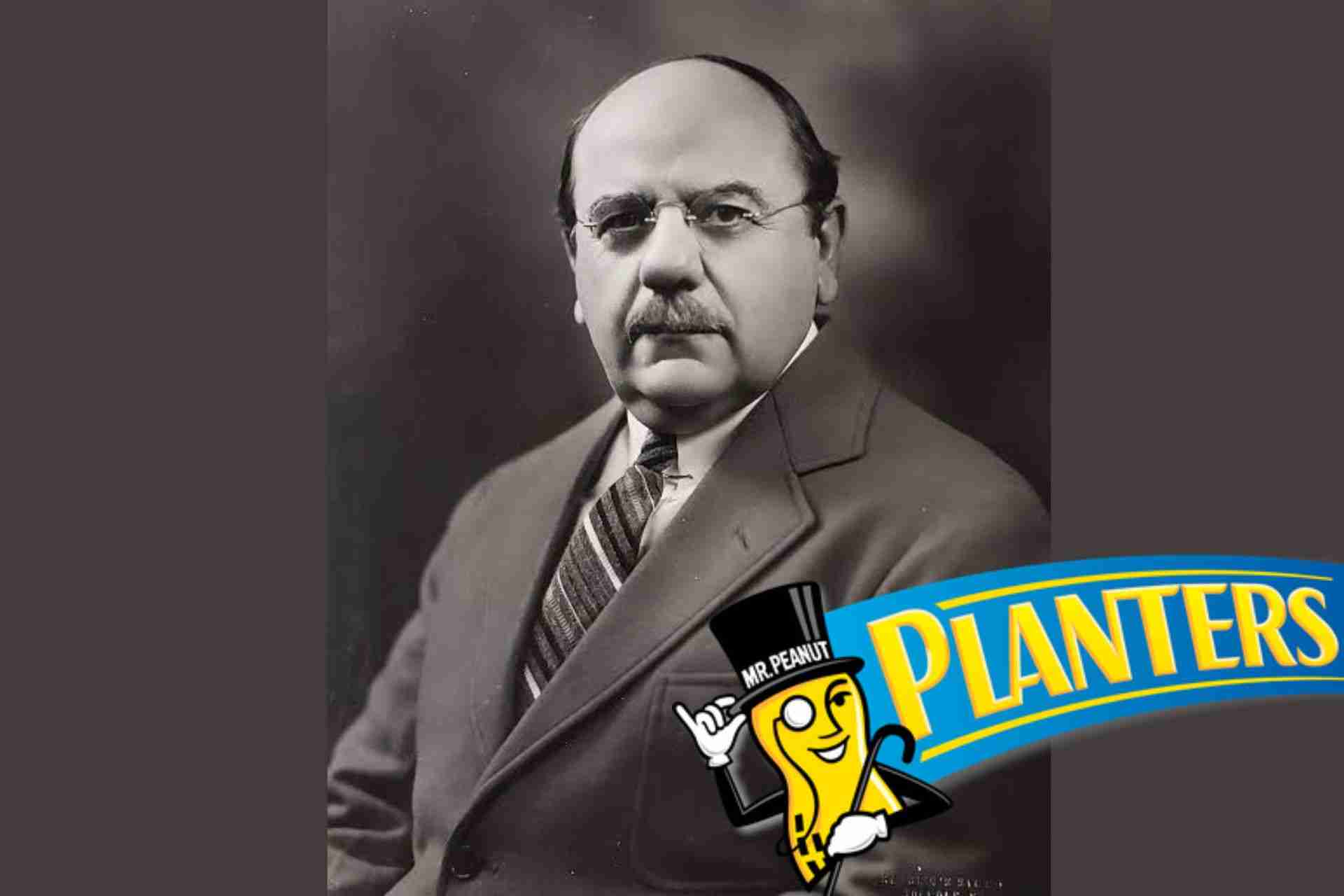
Amedeo Obici: the Italian Immigrant who built an empire on peanuts
From Oderzo to Pennsylvania: a child alone in the New World
In 1889, an 11-year-old boy from Oderzo, a modest town nestled in Italy’s Veneto region, embarked alone on a journey that would come to embody the archetype of the American Dream. Amedeo Obici had recently lost his father. His mother, like many Italians of that era, envisioned a better life in America for her son and sent him across the ocean with a train ticket to Scranton, Pennsylvania, financed by relatives. But fate intervened. Through a twist of miscommunication, Obici disembarked and made his way to Wilkes-Barre, an industrial town far from his intended destination. He spoke no English, had no money, and knew no one. Yet, his story did not end in tragedy. It began there. Taken in by the Musante family, fellow Italian immigrants who operated a fruit shop, young Obici found shelter, work, and—most importantly—opportunity. He started as a fruit vendor but soon became fascinated by peanuts, a popular snack sold in local markets. Here, amid barrels of produce and newspaper-wrapped snacks, began a fascination that would define his life. He wasn’t merely adapting to his new country; he was already imagining how to thrive in it.
This moment, both precarious and full of potential, reflects the experience of millions of Italians who left behind the fractured Kingdom of Italy for a place where identity was forged in labor and self-determination. In the late 19th century, southern and northern Italians alike fled poverty, political uncertainty, and natural disasters. Obici’s story mirrors this wave of migration but distinguishes itself through resilience, ingenuity, and an almost poetic irony: a child, lost and alone, becomes the face of an American brand.
The rise of a Peanut Baron: ingenuity in a brown paper bag
Amedeo Obici didn’t become an entrepreneur by accident. As a teenager, he learned the art of roasting peanuts, fine-tuning the process until the flavor was just right. He packaged them in brown paper bags and sold them for five cents apiece. But more than the peanuts themselves, it was his sense of showmanship and personal connection with customers that set him apart. He offered free samples, kept his cart spotless, and greeted people with a blend of old-world charm and new-world savvy.
In 1906, Obici partnered with Mario Peruzzi, another Italian immigrant, to officially launch the Planters Peanut Company. They soon rebranded as the Planters Nut and Chocolate Company, and what had begun as a humble peanut stand grew into a full-fledged enterprise. Obici was not merely manufacturing a snack; he was shaping a new consumer culture. Cleanliness, consistency, and packaging were his weapons. He understood that branding mattered just as much as product.
It’s important to recognize how revolutionary this was. At the time, peanuts were considered a low-class snack, often sold in dusty barrels or by street vendors. Obici elevated their image by ensuring sanitary conditions, uniform roasting, and elegant presentation. In a sense, he ennobled the peanut—turning it from a carnival treat into a household staple. Like Ghirardelli in the chocolate industry, Obici brought Italian craftsmanship and aesthetics to American consumerism, helping redefine taste and quality standards.

Mr. Peanut: a mascot, a myth, a marketing genius
In 1916, in a stroke of both marketing brilliance and cultural timing, Obici held a public contest to design a company mascot. The winner? A young Italian-American boy named Antonio Gentile, who drew a charming anthropomorphic peanut with spats, a cane, and a monocle. Refined by professional artists, this character became Mr. Peanut: a whimsical yet dignified figure who soon transcended packaging and entered the pantheon of American advertising icons.
Mr. Peanut wasn’t just a mascot; he was a symbol. He embodied refinement, class, and a kind of tongue-in-cheek aristocracy. This was no accident. At a time when Italian-Americans were climbing the social ladder, often attempting to distance themselves from peasant roots, Mr. Peanut represented aspiration. In his monocle and top hat, he carried echoes of British gentility and American success.
From a historical perspective, this character served a dual function. For American consumers, he was charming and memorable. For Obici, he was a carefully crafted persona, signaling that the peanut—and the immigrant behind it—could be elegant, respectable, and worthy of national attention. The genius of Mr. Peanut was that he made a simple product feel noble, while subtly shifting perceptions of the people who brought it to market.
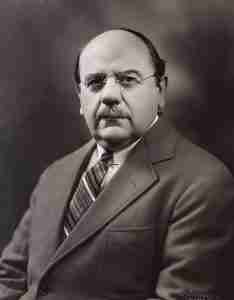
Amedeo Obici
The move to Virginia: building an industrial legacy
In 1913, Obici relocated Planters’ operations to Suffolk, Virginia, a decision rooted in both economic logic and visionary planning. Suffolk was the heartland of American peanut farming, and by positioning his factory near the source of his raw materials, Obici streamlined production and reduced costs. But more importantly, he invested in people.
Unlike many industrialists of his era, Obici treated his workers with dignity. He provided stable jobs, fair wages, and a sense of purpose. He helped build homes, supported schools, and contributed to public life. Suffolk was not just the site of his factory; it was the canvas for his philanthropic ambitions. To the local population, Obici was more than a businessman. He was a civic figure, almost paternal in his approach.
When he and his wife Louise moved into Bay Point Farm, they led a quiet but impactful life. No garish displays of wealth, no scandals. When Louise passed away in 1938, Obici honored her memory by commissioning a hospital—not a statue or mausoleum, but a living, healing institution. This was his ethos: success was not meant to isolate, but to uplift.
A legacy of philanthropy: the quiet power of giving back
By the time of his death in 1947, Amedeo Obici had already secured his place in American business history. But it is his philanthropy that arguably defines his legacy most clearly. Childless, he directed his wealth toward projects that benefited entire communities. The Louise Obici Memorial Hospital in Suffolk still bears his name, a reminder that success and generosity need not be opposites.
His commitment to giving extended beyond American borders. In Oderzo, the town of his birth, Obici funded schools, healthcare facilities, and public improvements. He did not return home in triumph to build a palace; he returned through quiet acts of generosity that stitched together two worlds. In a time when many immigrants felt the pressure to choose between old and new identities, Obici chose both. He never rejected his Italian roots, nor did he weaponize them. He honored them, and in doing so, showed that one could be fully American and deeply Italian.
This duality is often misunderstood in contemporary discourse on immigration. Obici’s life is proof that integration is not erasure, and that pride in one’s origins can coexist with dedication to a new homeland. He was not a hyphenated identity; he was a bridge.
Why Amedeo Obici matters today: more than peanuts
In the current global landscape, where immigration is too often framed as a crisis or a threat, the story of Amedeo Obici offers an essential counterpoint. He arrived in the United States as a vulnerable child with no language skills, no connections, and no safety net. Yet he built a company that fed a nation, created jobs, and fostered innovation.
Obici reminds us that entrepreneurship is not merely a function of capital, but of vision, tenacity, and social conscience. He understood branding before it was taught in business schools. He knew that the story behind a product mattered—that values could be woven into every aspect of business, from packaging to philanthropy.
For Americans who admire Italy’s culture, cuisine, and beauty, Obici represents something more profound: the spirit of Italy as it lives and breathes in the American context. He was not a celebrity, but he was significant. A craftsman, a benefactor, a builder of quiet empires. His life challenges us to reconsider what legacy truly means. Watch Planters’ 2020 Super Bowl Commercial here.
Conclusion: a name worth remembering
Today, Mr. Peanut remains instantly recognizable. But the man behind him—Amedeo Obici—has faded into relative obscurity. That is a loss worth correcting. Obici’s story is not just a business biography; it is a meditation on migration, ethics, creativity, and transatlantic kinship.
He deserves to be remembered not only for his achievements but for the spirit in which he pursued them. The next time you open a can of Planters peanuts, think not of the mascot alone, but of the boy from Oderzo who crossed an ocean, got lost, and found a nation willing to believe in his dream. His life, like his product, was simple—and extraordinary.
