

Tiramisu: Italy’s most enigmatic dessert
Tiramisu, with its delicate balance of espresso-soaked ladyfingers, rich mascarpone, and a dusting of cocoa, has conquered palates across the world. A symbol of Italian indulgence, this dessert carries with it a history wrapped in mystery, culinary rivalries, and an unexpected journey beyond Italy’s borders. Its origins remain hotly debated, with multiple regions claiming to have invented it, and its global popularity speaks to the universal appeal of Italian cuisine.
A Disputed Birthplace: who really created this Italian sweet?
The story of this sweet is one of culinary contention, as several Italian regions stake their claim to its creation. The two main rivals in this debate are Veneto and Friuli Venezia Giulia, each presenting compelling narratives to support their case. In Veneto, the city of Treviso often takes credit for inventing tiramisu. According to one popular theory, the dessert was created in the 1960s at the restaurant Le Beccherie. The story goes that the chef, Roberto Linguanotto, and the restaurant’s owner, Ada Campeol, developed tiramisu as a revitalizing treat for new mothers. The very name “tiramisù” translates to “pick me up” or “cheer me up,” a reference to the energizing combination of coffee, eggs, and sugar. However, Friuli Venezia Giulia contests this claim, arguing that tiramisu existed in their region long before it became popularized in Treviso. A competing legend suggests that a similar dessert was served in the 1950s at the Albergo Roma in Tolmezzo. The innkeeper, Norma Pielli, reportedly offered a layered coffee and mascarpone dessert to guests, particularly those who needed a boost before continuing their travels. A more colorful tale even links tiramisu to brothels. According to some accounts, the dessert was first prepared in certain Venetian establishments to invigorate clients before their visits. Whether truth or fiction, this narrative adds a layer of intrigue to the origins of Italy’s most famous dessert.
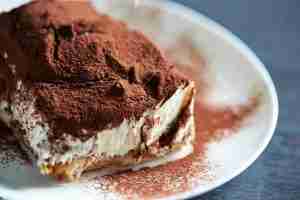
The Evolution of a classic: from home kitchens to global phenomenon
Though its exact birthplace remains contested, what is certain is that tiramisu remained a regional specialty for several years before reaching international fame. In Italy, desserts based on soaked biscuits and creamy fillings were already common, particularly in layered variations resembling English trifle. Tiramisu, however, set itself apart with its unique combination of flavors and the exclusivity of mascarpone, a cheese from Lombardy that wasn’t widely used outside northern Italy. By the 1980s, tiramisu began appearing in restaurants across Italy, and its reputation spread beyond the country’s borders. Its simplicity played a significant role in this expansion—requiring no baking, it was easy to prepare in professional kitchens and home settings alike. This accessibility, paired with the seductive richness of its ingredients, made tiramisu an ideal ambassador for Italian desserts abroad.
An American love affair
Tiramisu’s journey to the United States was remarkably swift compared to other traditional Italian dishes. While many Italian foods had to endure decades of adaptation before being fully embraced in the American culinary landscape, this sweet made an immediate impact. By the late 1980s and early 1990s, it had become a fixture on the menus of Italian restaurants in cities like New York, Chicago, and San Francisco. One major reason for its rapid popularity was its association with fine dining. Unlike rustic Italian desserts such as cannoli or panna cotta, this exuded an air of sophistication. It was served in elegant portions, often with a drizzle of liqueur or a delicate cocoa dusting. Celebrity chefs and high-end restaurants embraced it, leading to a perception of tiramisu as a luxurious treat rather than a simple homemade dessert. The media also played a role in its ascent. Tiramisu was frequently featured in cooking shows and food magazines throughout the 1990s, solidifying its place as an essential Italian dessert in the American imagination. In an era when global cuisine was becoming more accessible, tiramisu became synonymous with the refined side of Italian dining.
Tiramisu in Europe and beyond
While its success in the United States was meteoric, tiramisu’s influence was also growing across Europe. France, already enamored with Italian gastronomy, welcomed tiramisu into its patisserie culture, often presenting it with slight variations, such as replacing coffee with fruit flavors. Germany and the United Kingdom followed suit, with Italian restaurants and cafes incorporating it into their menus as an alternative to heavier desserts. Outside Europe and the U.S., the Italian sweet continued its global conquest. Japan, known for its appreciation of delicate textures and refined flavors, saw a tiramisu boom in the late 1990s. Japanese pastry chefs experimented with matcha-infused versions, creating a fusion between traditional Italian flavors and their own culinary heritage. Today, tiramisu-inspired variations exist in China, Latin America, and the Middle East, with each region adding its own twist to the beloved classic.

Matcha Tiramisu – very popular in Japan
The modern Renaissance: reinventing this special sweet
Despite its widespread popularity, tiramisu has not remained static. Modern chefs continually reinvent it, experimenting with alternative ingredients while maintaining the essence of its flavor profile. Some variations replace traditional ladyfingers with sponge cake or biscotti, while others incorporate unconventional elements like pistachios, Nutella, or even salted caramel. The rise of vegan and gluten-free diets has also inspired creative adaptations. Coconut cream substitutes mascarpone, and almond-based cookies replace ladyfingers, ensuring that even those with dietary restrictions can enjoy this Italian masterpiece.
The enduring magic of this sweet
Part the enduring charm of this Italian sweet is its balance of contrasts: bitterness from coffee and cocoa against the luscious sweetness of mascarpone, the airy lightness of its texture alongside its rich depth of flavor. It is a dessert that tells a story—a tale of tradition, rivalry, and reinvention. Whether enjoyed in an intimate trattoria in Treviso, a high-end restaurant in New York, or a café in Tokyo, tiramisù remains a universal pleasure. It stands as a testament to Italy’s ability to craft dishes that transcend time and borders, captivating generations of food lovers with every creamy, coffee-infused bite. As tiramisu continues to evolve, its legacy only grows stronger. New variations and interpretations ensure that the dessert remains relevant in contemporary gastronomy. Whether purists insist on the traditional recipe or food innovators push the boundaries, tiramisu retains its signature charm, reminding us of Italy’s incredible culinary ingenuity.
Ultimately, tiramisu is more than just a dessert; it is an experience. Its layers of flavor echo the rich and diverse history that shaped it, making every spoonful a taste of the past and a promise of its future in kitchens around the world.
