
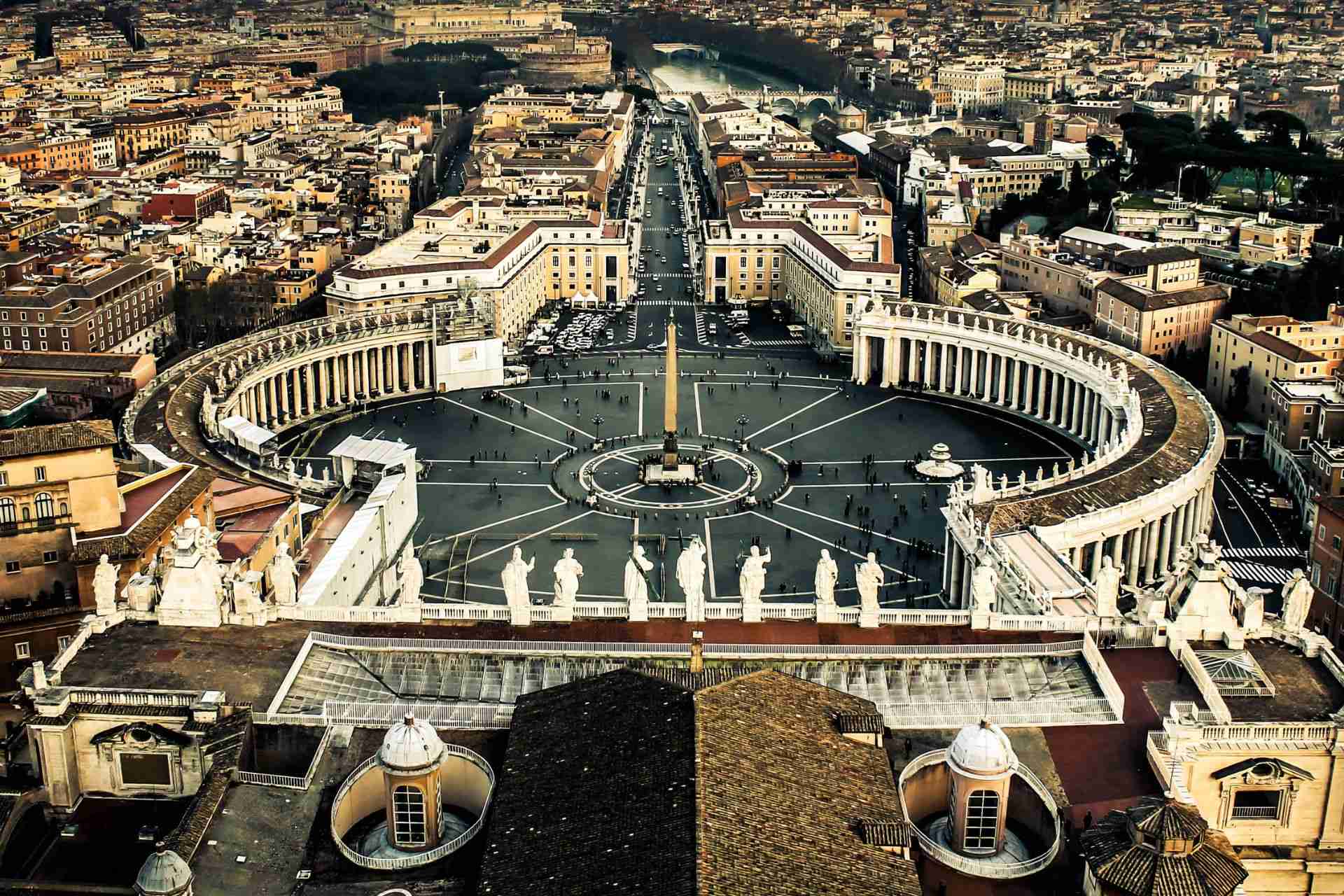
The Vatican: holy powerhouse in the heart of Italy
Tucked inside the bustling streets of Rome, the Vatican isn’t just another pit stop for tourists chasing gelato and gladiators. It’s a sovereign state, a spiritual powerhouse, and the headquarters of the Roman Catholic Church. With a history soaked in politics, power, and piety, Vatican City is more than just the Pope’s crib — it’s the epicenter of Catholicism, influencing millions worldwide and playing a unique role in Italy’s identity. Let’s dive into the wild journey of how this tiny state became a global spiritual heavyweight.
Vatican City: a city-state smaller than your neighborhood
First things first: Vatican City is the smallest country in the world. Like, seriously small — just 0.49 square kilometers. You could run a few laps around it before lunch. Despite its size, the Vatican punches way above its weight. It’s fully independent, has its own post office, radio station, flag, passports, and even a soccer team (though don’t expect them in the World Cup anytime soon). Now here’s the kicker — it’s located entirely inside Rome, the capital of Italy. That’s like having a micro-nation chillin’ in the middle of NYC. But don’t get it twisted: Vatican City is no random backyard project. It’s been officially recognized as a sovereign state since 1929, thanks to the Lateran Treaties, and the Pope runs the show — no president, no prime minister, just good ol’ divine guidance.
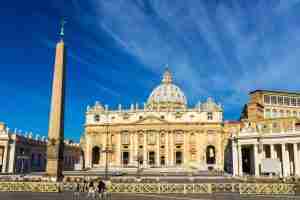
Every year, millions of pilgrims and curious tourists flock to the Vatican to catch a glimpse of St. Peter’s Basilica, the Sistine Chapel, and — if they’re lucky — a wave from the Pope himself. And though the Vatican’s population barely scrapes 800 people, its influence spans continents.
Vatican City: from pagan roots to papal reign
Long before it became the spiritual HQ of 1.3 billion Catholics, the Vatican Hill was a burial site in ancient Rome, far outside the city walls. According to tradition, St. Peter, one of Jesus’s apostles and the first Bishop of Rome, was martyred here around 64 AD. His tomb would later become the foundation of the grand St. Peter’s Basilica, cementing the site’s spiritual significance. As Christianity spread and the Roman Empire transformed, the bishop of Rome — aka the Pope — grew in power, not just spiritually but politically too. Fast forward to the Middle Ages, and the Pope wasn’t just a holy man — he was a kingmaker, commanding armies, influencing monarchs, and ruling over the Papal States, a swath of central Italy governed directly by the Church.
But then came the 19th century, when Italian unification movements were sweeping through the peninsula. In 1870, the Kingdom of Italy captured Rome and annexed the Papal States, leaving the Pope holed up in the Vatican, refusing to recognize the new Italian state. He was basically like, “Nope, I ain’t coming out until y’all give me my sovereignty back.” This stalemate lasted almost 60 years.
The Lateran treaties: a holy deal in a secular world
Cue the dramatic music — in 1929, Benito Mussolini, the fascist Prime Minister of Italy, struck a historic agreement with the Holy See. This deal, known as the Lateran Pacts, was a trilogy of agreements between the Kingdom of Italy and the Papacy that finally settled the long-standing “Roman Question.”
Here’s the breakdown:
- The Vatican was recognized as an independent state.
- Catholicism was declared the state religion of Italy.
- The Church got a hefty financial compensation for the loss of its territories.
It was a power move for both sides. Mussolini got the Catholic Church’s blessing (and political support), while the Pope got his own legit country. The Lateran Treaties gave the Church back its autonomy and spiritual control, even as Italy was turning more secular. Though Catholicism is no longer Italy’s official religion (that changed in 1984 with a revision to the treaties), the Vatican still enjoys massive clout in Italian society. Church bells ring through every town, saints’ days are national holidays, and Catholic values continue to shape public debates on everything from abortion to education.
The new Pope: Leo XIV brings a global voice to the Vatican
After Pope Francis passed away on April 21, 2025, the Church entered another delicate and sacred moment: the election of a new leader. The world once again turned its eyes to the Sistine Chapel, where around 120 cardinal electors — all under 80 — gathered in strict seclusion. No press leaks, no social media, no outside influence. Just prayer, ballots, and deep reflection. Within just four rounds of voting, the white smoke finally rose, signaling a decision had been made. The man chosen? Cardinal Robert Francis Prevost, an Augustinian from Chicago with decades of missionary service in Peru. Upon stepping onto the balcony of St. Peter’s Basilica, he introduced himself to the world as Pope Leo XIV — the first American pope in history. His election marked not only a continuation of Pope Francis’s reformist path but also a shift toward a more global, inclusive Church. Fluent in English and Spanish, and deeply connected to Latin America, Leo XIV embodies a bridge between North and South, tradition and renewal. In his first blessing, he kept it simple and powerful: “May peace be with all of you.” He followed with words of gratitude in Spanish for the Peruvian communities he once served, making clear that his papacy would not forget the peripheries. Taking the name Leo was no accident either — a nod to Pope Leo XIII, remembered for championing workers’ rights and social justice.
Now 69 years old, Pope Leo XIV inherits a Church in transition: one facing crises, disillusionment, and the fast-moving pressures of modern life. But with his humble demeanor and commitment to unity, his message is loud and clear: the Church must keep walking, with courage, faith, and open arms for all.
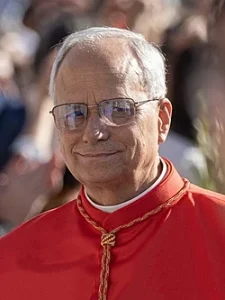
Pope Leo XIV
Vatican City: Catholic Church’s Influence in Italy Today
Now, Italy isn’t as church-going as it used to be, but make no mistake — Catholicism still runs deep in the culture. Over 70% of Italians still identify as Catholic (though many are more “cultural Catholics” than practicing ones), and the Church maintains a powerful voice in public life. Take politics, for example. Even though Italy is officially secular, political parties still court the Church’s support, and bishops often chime in on hot-button issues like euthanasia, IVF, same-sex marriage, and immigration. The Church also runs thousands of schools, hospitals, and charities, especially in underserved areas. Then there’s the money. In Italy, taxpayers can donate 0.8% of their income tax to a religious institution — and guess who gets the lion’s share? Yup, the Catholic Church. We’re talking hundreds of millions of euros every year. But it’s not all rosy. Scandals, especially those involving abuse and Vatican finances, have shaken public trust. Pope Francis, elected in 2013, has made reform a top priority — calling for transparency, humility, and action. He’s become a globally respected figure, speaking out on climate change, poverty, and peace, while still facing resistance within his own Church.
Vatican City: modern faith in an ancient shell
The Vatican is this crazy paradox: ancient yet modern, sacred yet political, tiny yet massive in spiritual reach. It’s where Michelangelo’s brushstrokes meet 21st-century geopolitics. It’s where pilgrims cry and presidents kneel. While many young Italians today may not hit up mass every Sunday, they still get married in church, baptize their kids, and carry saints in processions. Catholicism is in the air, the art, the architecture — it’s in the rhythm of life. And let’s be real — the Vatican knows how to keep its aura alive. Between the papal Instagram account, livestreamed audiences, and documentaries on Netflix, the Holy See has entered the digital age without giving up its mystique. So yeah, you might walk past Vatican City in 15 minutes flat, but don’t underestimate it. It’s the OG microstate, the heart of a religion that shaped Western civilization, and a key player in global conversations — all while sitting pretty behind those iconic walls in the middle of Rome.
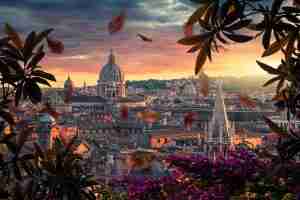
Final thoughts: the Vatican’s role in a changing world
In a world that’s speeding toward AI, crypto, and space tourism, it might seem wild that a city-state smaller than Central Park, led by a man in white robes, still commands global attention. But that’s the power of the Vatican. It’s not just a relic of the past — it’s a living institution that evolves, resists, adapts, and influences billions of people, from Buenos Aires to Bangkok. Italy and the Vatican share a bond that’s both complicated and inseparable. While secularism is growing and religious attendance is declining, the Catholic Church still acts as a moral compass for many Italians. From weddings and funerals to Christmas Eve mass at the local parish, religion remains a part of the national DNA — even when politics and belief systems shift.
