
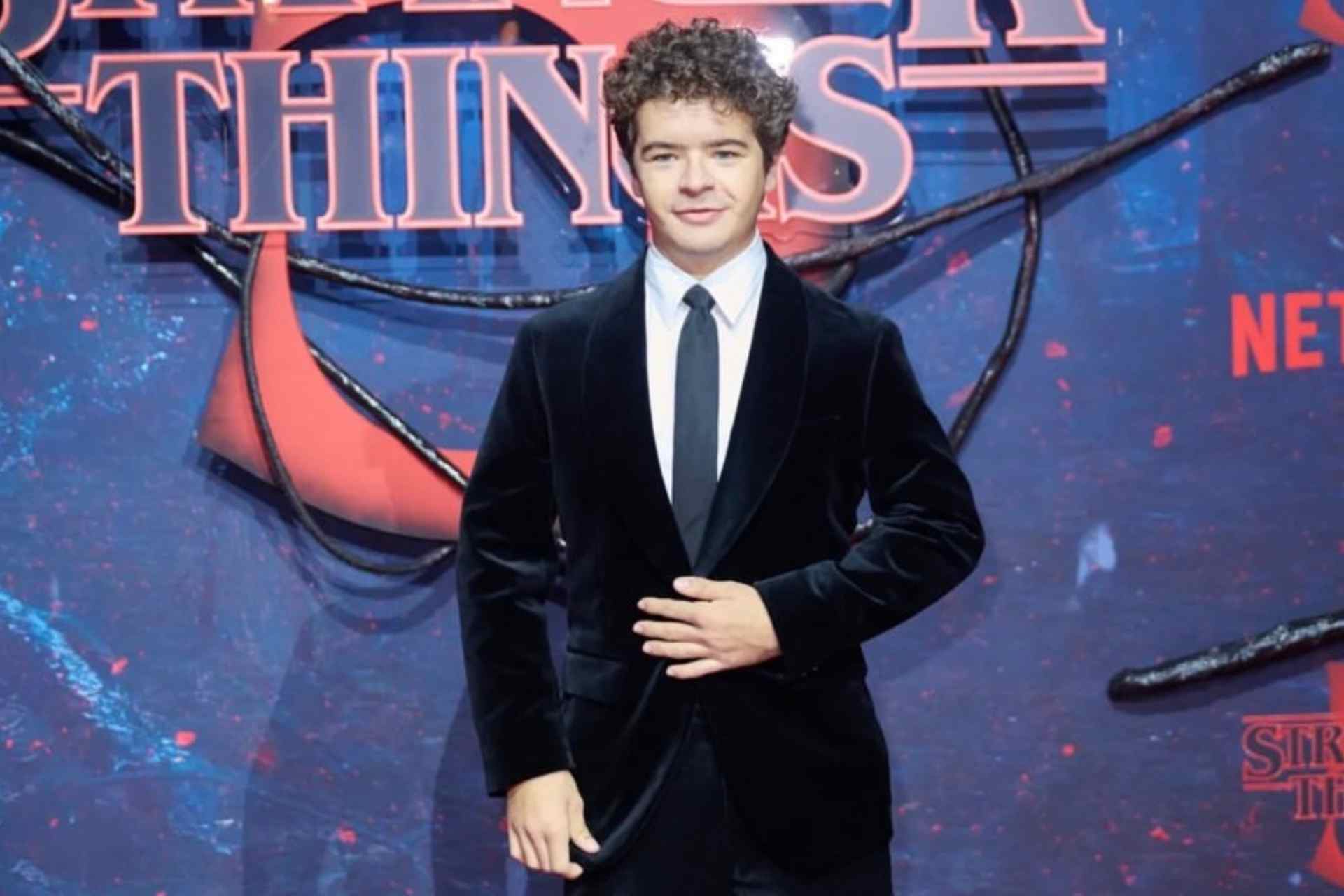
When you look at Gaten Matarazzo, it’s easy to associate him immediately with his breakout role in Stranger Things. But there’s a deeper layer to his identity that often gets overlooked, especially in mainstream discussions: his Italian heritage.
Matarazzo was born in Connecticut and raised in New Jersey, a state that has long been a cultural hub for Italian-American communities. His surname itself – Matarazzo – unmistakably points to Southern Italian origins, most likely from regions like Campania or Sicily, where the name is historically rooted.
Growing up in a family with Italian ancestry often means more than just a last name. It tends to shape the rhythm of everyday life: food as ritual, family as a central axis, and emotional expression as something that’s not filtered but lived out loud.
While Matarazzo hasn’t built his public persona exclusively around his heritage, you can see subtle traces of it in his demeanor. There’s a kind of warmth, a disarming openness, and a natural comedic timing that many associate with Italian-American performers.
In interviews, he comes across as grounded, relatable, and, frankly, real. No over-polished Hollywood façade. That authenticity is something often linked to second- or third-generation immigrant families, where identity is a blend rather than a fixed label. You’re American, sure, but there’s always that undercurrent of “where we come from.” And in Matarazzo’s case, that lineage connects him to a long tradition of Italian-American artists who’ve shaped U.S. entertainment, from theater to television.
There’s also another layer worth noting. Italian-American identity in the U.S. has historically been tied to strong community networks and a sense of resilience. For someone like Matarazzo, who has been open about living with cleidocranial dysplasia, that background may have played a role in how he navigates visibility and difference. It’s not just about heritage in a nostalgic sense. It’s about how cultural frameworks influence confidence, humor, and the ability to stand your ground when things get tough. And honestly, that kind of energy? It shows.

Gaten Matarazzo
Career: from Broadway kid to global recognition
Before the world knew him as Dustin Henderson, Gaten Matarazzo was already building a solid foundation in the performing arts. His early career started on Broadway, which is no small thing. He appeared in productions like “Priscilla”, “Queen of the Deser”t and later in “Les Misérables”, where he played Gavroche. That kind of training isn’t just about talent. It’s about discipline, timing, and the ability to perform live, night after night, without a safety net. Broadway kids don’t mess around. They learn fast, and they learn well.
What stands out about Matarazzo’s trajectory is how organic it feels. There’s no sense of overnight success, even if it might look that way from the outside. He put in the work early on, developing skills that would later translate seamlessly to screen acting. And when he transitioned into television, he didn’t come in as a blank slate. He already had stage presence, vocal control, and that rare ability to connect with an audience without trying too hard.
His casting in Stranger Things in 2016 changed everything. Suddenly, he wasn’t just a promising young performer. He was part of a cultural phenomenon. But what’s interesting is how he handled that shift.
A lot of young actors struggle when fame hits, especially when it comes fast and hard. Matarazzo, on the other hand, managed to stay relatively grounded. He didn’t try to reinvent himself overnight or chase every opportunity that came his way. Instead, he leaned into what he does best: being authentic, a little quirky, and totally unpretentious.
Outside of acting, he’s also explored hosting, notably with the Netflix show Prank Encounters. That move shows a willingness to experiment and step outside the typical actor trajectory. It’s like he’s saying: “Yeah, I can do drama, comedy, live performance,whatever works.” And honestly, that versatility is what keeps a career alive in the long run.
Let’s be real for a second: the industry can be brutal, especially for young actors. But Matarazzo has something that gives him an edge. He doesn’t come across as someone trying to fit into a mold. He’s just doing his thing. And that, in today’s landscape, is kind of a big deal.
Stranger Things: the role that changed everything
It’s impossible to talk about Gaten Matarazzo without diving into Stranger Things. The show didn’t just launch his career into the stratosphere. It also gave him a platform to redefine what a young character in a sci-fi series could be. Dustin Henderson isn’t your typical sidekick. He’s smart, funny, emotionally aware, and, at times, surprisingly vulnerable.
From the very first season, Dustin stood out. Not because he was the loudest or the most heroic, but because he felt real. He’s the kind of kid who cracks jokes when things get tense, who geeks out over science, and who forms deep, loyal friendships. Matarazzo brought a level of nuance to the role that could have easily been played as comic relief. Instead, he turned Dustin into one of the emotional anchors of the show.
One of the most significant aspects of his performance is how he incorporated his real-life condition, cleidocranial dysplasia, into the character. The show didn’t ignore it, nor did it sensationalize it. It was simply part of who Dustin is. That kind of representation matters. It normalizes difference without turning it into a storyline cliché. And for many viewers, especially younger ones, that visibility was powerful.
As the series progressed, Dustin’s role evolved. He became more central to the narrative, forming key relationships, particularly with Steve Harrington. Their dynamic became one of the highlights of the show, blending humor, mentorship, and genuine affection. It’s the kind of on-screen chemistry you can’t fake. You either have it, or you don’t. And these two? They nailed it.
Now, let’s not sugarcoat it. Stranger Things is a massive machine. Big budget, global audience, intense fan expectations. Being part of something like that can be overwhelming. But Matarazzo handled it with a level of maturity that’s honestly impressive. He didn’t get lost in the hype. He used the platform to raise awareness about his condition and to connect with fans in a meaningful way.
At the end of the day, Dustin Henderson isn’t just a character. He’s become a cultural reference point. And a big part of that is because of how Matarazzo chose to play him. Not as a caricature, but as a fully realized person. That’s what sticks.
The future: beyond Hawkins and into a broader artistic path
So what’s next for Gaten Matarazzo once Stranger Things wraps up? That’s the question a lot of people are asking. And honestly, it’s a fair one. When you’re so closely associated with a single role, there’s always the risk of being typecast. But if there’s one thing Matarazzo has shown so far, it’s that he’s not interested in being boxed in.
First off, his background in theater gives him a huge advantage. Film and TV are one thing, but stage acting requires a different kind of skill set. It’s raw, immediate, and unforgiving. The fact that he started there means he can always go back, whether it’s Broadway or other live performances. And let’s be honest, a return to theater wouldn’t be a step back. It would be a power move.
There’s also potential in music and voice acting. His vocal training and natural expressiveness make him a strong candidate for animated projects or even musical roles. In an industry that’s increasingly cross-platform, being able to move between mediums is a major asset. He’s not just an actor. He’s a performer in the broader sense of the word.
Another angle to consider is his growing role as an advocate. By speaking openly about cleidocranial dysplasia, he’s already positioned himself as more than just an entertainer. He’s someone who can influence conversations around representation and inclusion. That kind of visibility can open doors beyond traditional acting roles, including producing, hosting, or even developing projects that reflect his own experiences.
And here’s the thing and I’ll say it straight: he’s still young. There’s a tendency to expect immediate reinvention after a hit show ends, but that’s not always how it works. Sometimes the smartest move is to take a step back, choose projects carefully, and build a career that’s sustainable rather than explosive.
If he plays it right and so far, he has Matarazzo could easily transition into more mature roles, maybe even surprising audiences who still see him as Dustin. It’s all about timing and selection. No rush, no panic. Just solid choices. In a way, his journey reflects a broader pattern seen in many Italian-American artists: starting with strong roots, navigating a complex industry, and gradually carving out a space that’s uniquely their own.
Final considerations: the weight of early success and the freedom of what comes next
Looking at the trajectory of Gaten Matarazzo, what stands out most is not just the success itself, but the way it has been managed. He didn’t arrive in the spotlight as a blank slate, and he didn’t let sudden fame reshape him into something artificial. There’s a consistency in how he presents himself, both on and off screen, that feels increasingly rare in an industry built on reinvention and image control.
His Italian roots, while not constantly emphasized, remain part of a deeper cultural framework that informs his presence. There’s a natural expressiveness, a grounded sense of identity, and an ease in human connection that echo a broader Italian-American artistic tradition. At the same time, his career choices suggest a clear awareness of the risks that come with early success, especially after a defining role like Dustin in Stranger Things.
What matters now is not speed, but direction. Matarazzo has the tools to move beyond a single character, whether through theater, television, or new formats that demand versatility. If he continues to make deliberate, well-calibrated choices, his career can evolve in a way that feels both coherent and durable. In other words, no need to rush anything he’s playing the long game, and that’s exactly what sets him apart.
