

Madonna Italian roots.
The Italian heart of a pop queen: Madonna’s untold story
In these days, the calendar marks more than just another summer week — it marks the birthday of one of America’s most enduring and controversial cultural figures: Madonna Louise Ciccone, born August 16, 1958, in Bay City, Michigan.
In 2025, Madonna once again chose Italy as the backdrop for her birthday celebrations. This year, the pop icon was spotted in Florence and Siena, enjoying the art, history, and atmosphere of Tuscany. Her presence in these cities has once more highlighted Italy’s timeless appeal among international celebrities.
Her story begins far from the flashing lights of stadium stages. Her father, Silvio Ciccone, was a first-generation Italian-American whose parents hailed from the small Abruzzo town of Pacentro, clinging to the Apennine mountains. Her mother, Madonna Fortin, brought French-Canadian ancestry into the family tree. It’s a mix that created a household steeped in Catholic traditions, Sunday gatherings, and a kind of no-nonsense discipline that would later prove to be the steel core of Madonna’s career.
Madonna’s surname, Ciccone, might sound like just another Italian name to casual ears — but in Pacentro, it is tied to a lineage of people who knew how to endure hardship and rebuild from nothing. That small town, still dotted with stone houses and narrow alleys, once sent hundreds of young men and women across the Atlantic with little more than suitcases and an address scribbled on paper.
Madonna Italian roots. Growing up Italian-American in the Midwest
In the Detroit suburbs where Madonna grew up, Italian-American life was both an anchor and a stage. There were long tables covered in steaming pasta bowls, relatives speaking in a mix of English and dialect, and an unspoken rule that you did not leave the table until everyone else was done.
Her father worked as an engineer at Chrysler, and while the auto industry defined the city, the Ciccone household was its own training ground. Silvio was strict — the kind of parent who believed that early mornings, chores, and high standards built character. “Nothing worth having comes easy” wasn’t just a saying; it was a daily expectation.
That discipline, combined with the cultural warmth of her extended family, forged a duality in Madonna: the drive to achieve and the need to express. Both would collide when she set her sights on a career in music.
Italian Heritage and the immigrant hustle
The Italian-American work ethic isn’t just folklore. Families like the Ciccones came to America with the awareness that opportunities were rare and easily lost. The unspoken mantra was simple: you work twice as hard for half the recognition — and then you keep going.
When Madonna arrived in New York City in 1978 with just $35 in her pocket, she wasn’t simply a dreamer. She was an heir to that relentless immigrant mindset. She took odd jobs — waitressing, dancing in small troupes, modeling for art classes — all while chasing music gigs.
In a sense, she was updating the Italian immigrant story for a new century: the factory floor replaced by the downtown club, the long hours spent not behind a sewing machine but in a rehearsal studio, perfecting choreography. She wasn’t there to play it safe — she was there to break through, or go home with nothing.

Madonna in 2025
The rise: from “Holiday” to Cultural disruption
Her self-titled debut album in 1983 brought the world “Holiday” and “Borderline,” infectious tracks that pulled her from the underground dance scene into the pop mainstream. But 1984’s “Like a Virgin” was a cultural shockwave.
Here’s a lesser-known detail: the provocative wedding-dress performance of “Like a Virgin” at the MTV Video Music Awards wasn’t fully planned the way it unfolded. A slipped shoe strap forced her to drop to the floor, which she turned into a sensual crawl. The press called it scandalous — but Madonna knew controversy was a currency.
For Italians, reinvention is practically an art form. Italy has reinvented itself politically, artistically, and economically countless times over centuries. Madonna took that instinct global: each album era was a new chapter, from the pastel optimism of “True Blue” to the introspective electronica of “Ray of Light.” She never let audiences get too comfortable.
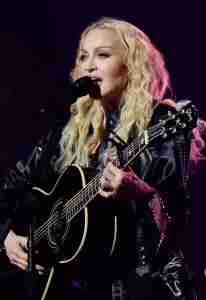
By chrisweger – Madonna – The Celebration tour live – London 15/10/2023.
Madonna Italian roots. Italian influence on style and storytelling
Madonna’s style — lace gloves, crucifixes, dramatic silhouettes — owes something to the operatic flair of Italian fashion and cinema. Think of designers like Dolce & Gabbana, with whom she would later collaborate, or the visual language of Federico Fellini, whose films inspired her “Boys for Pet Shop Boys” and “Open Your Heart” video aesthetics.
Her music videos often carried an almost cinematic Catholicism: saints, sinners, rituals, and shadows. It wasn’t just shock value; it was storytelling in the Italian tradition — where symbolism runs deep and contradictions are embraced.
A fun fact for cinephiles: The set design of her “Like a Prayer” video was directly influenced by Italian Baroque churches, with their mix of gold leaf, religious iconography, and raw human emotion.
Madonna Italian roots. Faith, Rebellion, and the Catholic Lens
Raised Catholic, Madonna both respected and challenged religious tradition. She once said that Catholicism taught her the power of ritual and imagery — tools she repurposed for art. Songs like “Like a Prayer” and “Oh Father” didn’t just flirt with controversy; they dissected the push and pull between faith and independence.
This tension is deeply Italian: a culture that reveres tradition but is also home to some of the world’s most subversive artists. In the U.S., where pop stars often steered away from theological themes, Madonna walked directly into the fire — and emerged with headlines, protests, and devoted fans.
The Numbers and the endurance factor
- 300 million+ records sold worldwide
- 12 Billboard Hot 100 No. 1 singles
- Multiple Guinness World Records, including best-selling female recording artist of all time
- Tours grossing hundreds of millions of dollars
- Rock & Roll Hall of Fame inductee (2008)
These aren’t just statistics; they represent four decades of staying relevant in an industry designed to replace yesterday’s stars with tomorrow’s trends.
Her longevity is part Detroit toughness, part Italian persistence: never accept the first “no” as the final answer, and never stop working on the next move before the last one is finished.
Beyond music: Madonna as cultural architect
Madonna’s influence runs deeper than radio singles. She helped normalize conversations around female sexual autonomy in mainstream America, long before it was widely accepted. She brought LGBTQ+ dancers and culture to global stages at a time when it was marginalized in the U.S.
Her Italian roots also come through in this defiance: a certain refusal to let others dictate identity. In Italian family life, you learn early how to hold your ground during a spirited dinner-table debate — that skill translates surprisingly well to handling a hostile press conference.
Madonna Italian roots. Curiosities you might not know
- She speaks some Italian and has visited Pacentro, where locals still point out her family home.
- In 1986, she played a role in reviving the use of rosary beads as fashion accessories — an idea inspired by her grandmother’s habit of wearing them visibly at home.
- Her middle name, Louise, came from her mother and is the name she used in early Michigan dance recitals.
- In 1990, during the Blond Ambition Tour, she faced threats from Italian authorities over the “Like a Virgin” performance in Rome, accused of blasphemy — she refused to alter the show.
- She once considered recording an entire Italian-language EP but dropped the idea due to label resistance.
The modern Madonna: still Italian at the core
Today, Madonna’s career continues to evolve. From collaborations with younger artists to experimental theater-style tours, she’s still redefining what a pop star can be past the age of 60.
Her approach mirrors the Italian philosophy of la bella figura — not just looking good, but making a lasting impression. It’s about leaving the room having changed the energy, whether you’re a guest at Sunday dinner or performing at the Grammys.
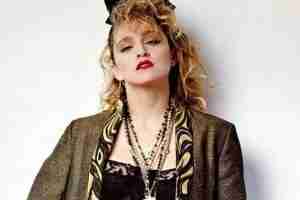
Madonna in the 80s
Conclusion: an Italian-American legacy in pop’s DNA
When future historians chart the evolution of American music, Madonna will stand as more than a hitmaker. She is a case study in adaptation, resilience, and the power of heritage.
Her albums — from Like a Virgin to Confessions on a Dance Floor — are not just entertainment; they are cultural markers, mapping how America shifted on issues of gender, sexuality, and art.
And while she is every inch an American success story, she remains inseparable from her Italian-American identity. That blend — of Midwestern grit and Abruzzese fire — is what turned a girl from Bay City into the Queen of Pop.
In Pacentro, they might put it more simply: la ragazza ce l’ha fatta — the girl made it.
