
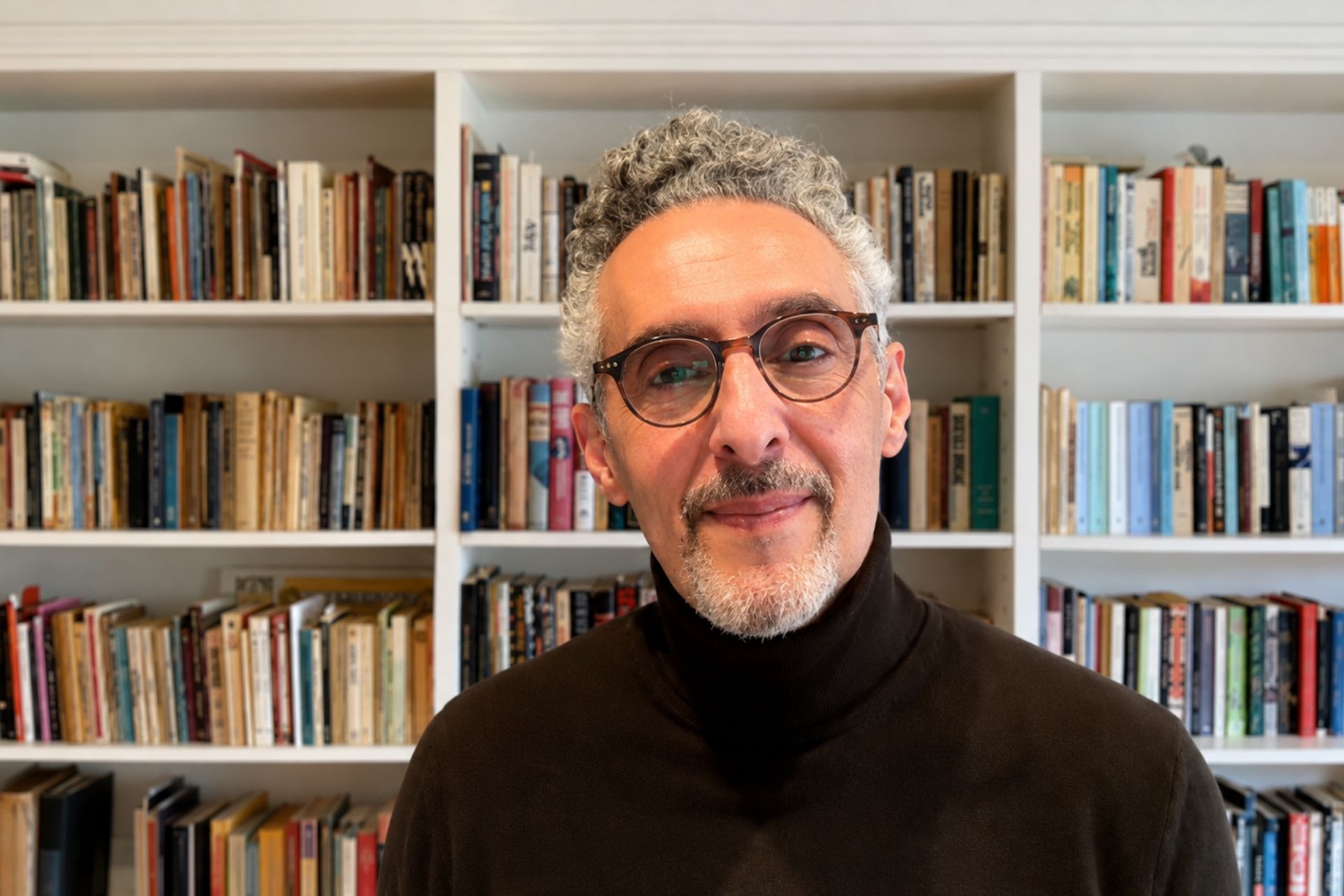
John Michael Turturro has built the kind of career that refuses to fit inside a neat Hollywood box.
Born in New York on February 28, 1957, he is an actor, director and screenwriter whose face can suggest nervous intelligence, comic panic, buried rage or unexpected tenderness—sometimes in the same scene.
Across more than seventy films, along with major television work, he has moved easily between independent cinema and studio spectacle, leading roles and unforgettable supporting turns, American stories and European projects. That range is not a matter of simply changing costumes.
John Turturro seems to rebuild himself from the inside for every character, finding a different rhythm of speech, posture and emotional temperature. One minute he is a tormented 1940s playwright in Barton Fink; the next he is the flamboyant bowling rival Jesus Quintana in “The Big Lebowski”. He can bring moral gravity to “The Night Of”, bureaucratic melancholy to Severance, menace to “The Batman” and broad, high-energy comedy to the “Transformers” franchise. In short, the guy has serious chops.
Yet the thread connecting those wildly different performances is a deep curiosity about outsiders: people who want respect, recognition, love or control and rarely know how to ask for it. John Turturro’s dual American and Italian identity matters here. It has given him more than a family background; it has supplied him with languages, gestures, memories and cultural tensions that repeatedly feed his art. His story begins in New York, but Italy is never far from the frame.
Brooklyn, Queens and the Italian family story
John Turturro was born in Brooklyn and grew up in Rosedale, Queens, in a family shaped by Italian immigration. His father, Nicholas born Nicola Turturro was a carpenter from Giovinazzo, in Puglia, who arrived in the United States with his family when he was six. His mother, Katherine Florence Incerella, was an American jazz singer and the daughter of Italian immigrants from Aragona, Sicily.
Those two lines of descent, one Puglian and one Sicilian, placed John Turturro inside a recognizably Italian American world while also exposing him to two forms of creative labor: the practical craftsmanship of a carpenter and the expressive musicality of a singer.
It is tempting to see both parents reflected in his work. His performances are carefully constructed, but they also swing, snap and breathe like music.
Family remained a visible part of his public life. His brother Nicholas became an actor, while his brother Ralph lives in a care home for psychiatric disorders. On his father’s side, John is also a cousin of Aida Turturro, widely known as Janice Soprano in The Sopranos. He later married actress Katherine Borowitz, and the couple had two sons, Amedeo, born in 1990, and Diego, born in 2000.
John Turturro’s connection to Italy eventually became official as well as emotional: he obtained Italian citizenship in 2011, was named a Commander of the Order of the Star of Italy in 2018 and received honorary citizenship from Giovinazzo in 2019.
These honors did not manufacture a convenient celebrity identity. They recognized a bond he had spent decades exploring through film, theater, music and family memory.
From Yale to Scorsese: learning the craft the hard way
Before audiences knew his name, Turturro trained seriously. He earned a Master of Fine Arts from the Yale School of Drama, a foundation that helps explain the precision beneath even his wildest characters.
His earliest connection to major American cinema came as an uncredited extra in Martin Scorsese’s “Raging Bull” in 1980. It was a tiny beginning, but a fitting one: Turturro entered film through the work of a director famous for turning New York neighborhoods, ethnic identity and masculine conflict into high art.
During the 1980s, the parts grew. He appeared in “Desperately Seeking” Susan and William Friedkin’s To Live and Die in L.A.” in 1985, then worked in “Gung Ho”, Woody Allen’s “Hannah and Her Sisters” and Scorsese’s “The Color of Money” in 1986.
In 1987, his performance in “Five Corners” caught the attention of Spike Lee, who cast him as Pino in “Do the Right Thing”. That 1989 film became a breakthrough and the start of one of John Turturro’s defining creative partnerships.
Pino is openly racist, defensive and trapped in contradiction: he resents the Black community surrounding his family’s pizzeria while idolizing Black celebrities. Turturro does not soften him, but he makes his ugliness psychologically legible.
He would return to Lee’s cinema again and again, appearing in “Mo’ Better Blues”, “Jungle Fever”, “Clockers”, “Girl 6”, “He Got Game”, “She Hate Me” and “Miracle at St. Anna”, as well as providing a voice for “Summer of Sam”. By then, John Turturro was no flash in the pan. He had become one of the essential character actors of his generation, trusted by demanding filmmakers because he could make difficult people feel dangerously alive.
The roles that hit hardest and why they worked
Several John Turturro performances have become cultural landmarks, but they succeeded for different reasons. In the Coen brothers’ “Miller’s Crossing” he played Bernie Bernbaum, a fast-talking survivor whose pleading scene exposes the terror beneath his schemes.
A year later, “Barton Fink” gave him one of his greatest leading roles. As an idealistic New York playwright swallowed by Hollywood, he turns creative blockage into something physical: sweat, suspicion and self-importance accumulate until the character’s mind seems ready to crack.
The performance brought him the Best Actor prize at Cannes, while the film later earned him the David di Donatello for best foreign actor.
Robert Redford’s “Quiz Show” offered another showcase in 1994. Playing Herbie Stempel, Turturro balanced resentment, wounded pride and comic intensity, earning a Golden Globe nomination for supporting actor.
Then came Jesus Quintana in the Coens’ “The Big Lebowski” in 1998. Turturro occupies only a small slice of the movie, yet his purple costume, elaborate bowling ritual and fearless swagger turned Jesus into a cult icon.
That is screen presence, plain and simple: he walks in, owns the joint and leaves the audience wanting more. What worked best was not a single genre but a recurring creative equation: sharp writing, distinctive directors and characters living one inch away from humiliation or explosion. Give Turturro that kind of pressure, and he cooks.
More than a character actor: director, writer and musical storyteller
Calling John Turturro only a character actor misses half the picture. His work as a director and screenwriter reveals an artist interested in labor, performance, desire and the strange theater of everyday life.
He made his feature-directing debut with “Mac” in 1992 and also wrote the screenplay. The film’s focus on working-class experience resonates strongly with his background as the son of a carpenter; its seriousness about craftsmanship feels personal rather than ornamental.
He continued as writer-director with “Illuminata” in 1998, then made the audacious musical romance “Romance & Cigarettes” in 2005. Later came “Fading Gigolo” in 2013, the Rio-set episode “Quando não há Mais Amor” in the anthology “Rio”,” I Love You”, and “The Jesus Rolls” in 2019, which brought Jesus Quintana back to the screen in a story directed by John Turturro himself.
The most heartfelt expression of his Italian connection, however, may be “Passione”. Presented at the Venice International Film Festival in 2010, this musical documentary celebrates Naples and its songs, treating the city as a living performance in which streets, voices, bodies and history blend together.
John Turturro has described Naples as one of the places closest to his heart, and the film makes that affection tangible.
His cultural range expanded again in 2018, when he directed an opera for the first time: Verdi’s “Rigoletto” at Palermo’s Teatro Massimo. The move made perfect sense. Opera brings together acting, music, spectacle, family tragedy and emotional excess—all elements that have long circulated through his cinema.
Whether behind or in front of the camera, John Turturro is drawn to people whose inner lives are too large for polite realism.
A television renaissance: the night of, severance and late-career power
Television gave John Turturro another arena in which to show how much force he can generate through restraint. He won a Primetime Emmy in 2004 for his guest performance in the comedy series “Monk”, then earned far more sustained dramatic attention with The Night Of in 2016.
His Carmine Falcone in Matt Reeves’s “The Batman”, released in 2022, offered a colder variation on controlled power: a crime boss whose calmness makes him more threatening, not less. A 2024 appearance in “Mr. & Mrs. Smith” added another contemporary series to the list.
This late-career run is no comeback, because John Turturro never really went away. It is better understood as a shift in the industry around him: ambitious television finally began offering the kind of patient, layered roles his acting had always deserved.
Private ground, public honors and what comes next
For all the volatility of his characters, Turturro’s personal story suggests continuity: a long marriage to Katherine Borowitz, two sons, durable creative partnerships and an ongoing relationship with Italy. His honors map that journey. Beyond the Cannes recognition connected with Barton Fink and his David di Donatello, he has received major nominations from the Golden Globes, Emmys, Critics’ Choice Awards, Saturn Awards and acting guilds.
His history as a filmmaker also leaves room for another personal directing project, perhaps one connected to music, theater or Italian culture, though none should be treated as confirmed on the basis of the available information.
At this point he has nothing left to prove, which may be exactly what makes his next move interesting. He can go big, go intimate, play tragic, get weird or step behind the camera. Whatever comes next, smart money says he will not phone it in.
John Turturro’s real achievement is not merely that he has endured; it is that after decades of work, he still makes audiences wonder what on earth he might do next.
Final thoughts
John Turturro’s career demonstrates that success does not always depend on becoming a leading man. His strength lies in transformation, curiosity and the courage to make even uncomfortable characters feel human.
From the streets of New York to the stages and cities of Italy, he has carried his heritage without turning it into a stereotype. Instead, his Italian roots have become a creative language made of music, craftsmanship, emotion and memory.
What makes Turturro special, however, is his refusal to stand still. He acts, writes, directs and explores theater, opera and music with the energy of someone still searching for the next challenge. Some performers become predictable with age; Turturro has done the opposite. His television work has introduced new shades of restraint and vulnerability. Whatever direction he chooses next, his journey remains an example of talent, discipline and artistic freedom. In Hollywood terms, he is still the real deal.
