
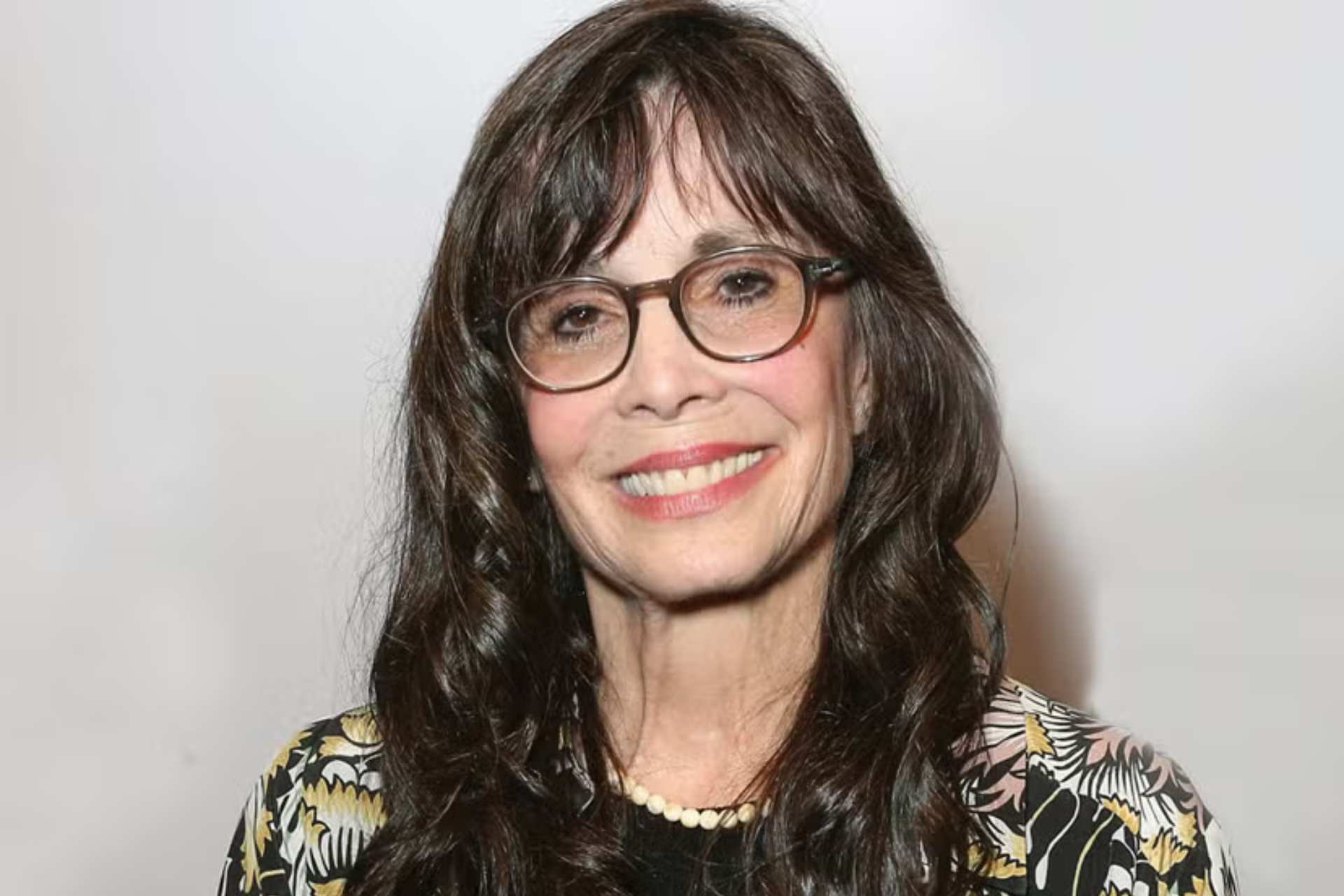
When people think of Talia Shire, the association is almost automatic: Adrian in “Rocky”, Connie Corleone in “The Godfather”. Two roles, two worlds, both iconic. And yet, reducing her career to these characters feels a bit like looking at a Renaissance painting and only noticing the frame. You’re technically right, but you’re missing the point.
Talia Shire belongs to a very specific category of actors. The kind that doesn’t push for attention but somehow ends up being unforgettable. She doesn’t perform at the audience. She draws you in. Slowly. Almost quietly. And before you realize it, she’s the emotional core of the scene, not flashy.
And that’s where things get interesting.
Because when you start analyzing her performances from a psychological and cultural perspective, you notice something consistent: restraint. Emotional control, a deep sense of relational awareness, these are not random traits. They are learned, embodied, often rooted in cultural frameworks. And in Shire’s case, that framework is strongly tied to her Italian heritage.
Let’s be honest for a second, Hollywood has always had a complicated relationship with Italian identity. On one side, it romanticizes it. On the other, it stereotypes it: passion, drama, family, chaos. But Shire’s acting doesn’t lean into those clichés. Instead, it reflects something much more nuanced. Something closer to what Italian culture actually holds beneath the surface: emotional depth without exhibition.
She doesn’t scream, doesn’t exaggerate, only stays. And in a cinematic environment that often rewards intensity over subtlety, that choice is bold. Whether intentional or not, it sets her apart. It creates a kind of presence that feels grounded, almost intimate. Like you’re watching a real person instead of a character. Which raises a question that goes beyond cinema.
What if the reason her performances feel so authentic… is because they are rooted in something real, something inherited, something cultural?
Talia Shire
Italian roots: Basilicata, Naples, and a legacy of migration
Talia Shire was born Talia Rose Coppola in New York in 1946, but her story doesn’t begin there. Like many Italian-American narratives, it starts with migration. With movement, with the quiet but profound shift of leaving one country to build a life in another.
Her paternal grandparents came from Bernalda, a small town in Basilicata, Southern Italy. Her maternal grandfather, Francesco Pennino, emigrated from Naples and built a career as a composer. Two different regions, two different cultural nuances, but one shared thread: Southern Italian identity.
Now, here’s the thing people often overlook, migration doesn’t just change geography. It reshapes identity, especially across generations.
Italian families who moved to the United States in the early 20th century didn’t simply assimilate. They carried their values with them, family loyalty, emotional intensity, respect for hierarchy, and a strong sense of belonging. These elements didn’t disappear.
And when you grow up inside that kind of environment, it leaves a mark, in Shire’s case, that mark is visible not in what she says, but in how she holds space. Her characters often operate within relationships, they observe, absorb and respond. There is always a relational dynamic at play. That’s not accidental. That’s cultural imprint.
Italian culture, especially in its Southern expression, has a very specific relationship with emotion. It’s not about constant expression. It’s about context. Timing. Appropriateness. Knowing when to speak and when to remain silent.
She doesn’t overplay emotion, but contains it and that containment creates tension. It creates depth. It makes the audience lean in. Honestly, it’s the kind of acting that doesn’t scream for validation. It just exists and because of that, it feels real.
And maybe that’s the real legacy of migration, not just a change of place. But a way of being that continues, quietly, across generations.
The Coppola family: more than fame, a creative ecosystem
Being part of the Coppola family is not simply about sharing a surname with influential figures, but about growing up inside a complex creative environment where storytelling, music, and cinema are not professions but everyday languages that shape identity from an early age.
Talia Shire is the daughter of composer Carmine Coppola and the sister of Francis Ford Coppola, while also being the aunt of Nicolas Cage and Sofia Coppola, a network that clearly represents one of the most influential artistic lineages in American cinema.
However, what makes her position particularly interesting is not the proximity to such a powerful legacy, but rather the way she chose not to compete with it or be defined by it, instead developing a personal trajectory that feels intentionally quieter and more introspective.
While her brother was redefining cinematic language through large-scale productions and strong directorial signatures, Shire was working on a completely different level, focusing on the emotional architecture of characters and the subtle dynamics that unfold between people rather than on spectacle or narrative dominance.
This contrast highlights something essential, because it shows how creative identity can diverge even within the same family, revealing that influence does not necessarily translate into imitation, but can instead generate alternative forms of expression that are equally powerful, even if less visible.
Rocky: Adrian and the power of quiet resilience
In Rocky, Talia Shire delivers a performance that challenges conventional expectations of female characters in mainstream cinema by presenting a figure whose strength emerges not through dominance or visibility but through gradual emotional development and relational presence.
Adrian is initially introduced as a withdrawn and almost invisible character, someone who avoids confrontation and seems disconnected from the more assertive dynamics surrounding her, yet this apparent fragility becomes the foundation for a much deeper transformation.
As the narrative progresses, Shire carefully constructs Adrian’s evolution through minimal but precise adjustments in expression, posture, and interaction, demonstrating that character growth does not require dramatic shifts but can instead emerge through consistency and subtle change.
Her Academy Award nomination for Best Actress acknowledges a performance that redefines strength by detaching it from traditional markers such as assertiveness or control, and instead associating it with stability, presence, and emotional reliability.
Adrian becomes the emotional anchor of the story, not by directing the narrative, but by grounding it, offering a relational space in which Rocky’s identity can develop beyond competition and performance.
This type of strength reflects a cultural dimension often present in Italian family systems, where resilience is expressed through continuity and support rather than overt assertion, creating a model of influence that operates quietly but consistently.
Shire’s interpretation avoids any form of exaggeration, allowing the character to remain believable and relatable, which ultimately makes Adrian one of the most enduring figures in the franchise despite her understated role.
Talia Shire: a career beyond the spotlight: choosing a different path
After achieving international recognition through “The Godfather” and “Rocky”, Talia Shire found herself in a position where she could have easily pursued a more conventional Hollywood trajectory characterized by high visibility, frequent leading roles, and continuous media presence.
However, instead of following that expected path, she made a series of choices that suggest a different understanding of success, one that prioritizes artistic coherence over external validation and long-term consistency over immediate exposure.
Throughout her career, she has participated in a wide range of projects, including independent films and less commercially oriented productions, maintaining a steady presence without aligning herself with the mechanisms that typically define mainstream success .
This approach indicates a strong internal orientation, as it implies the ability to evaluate opportunities based on personal criteria rather than industry expectations, which is not always common in environments driven by visibility and competition.
Her trajectory reflects a form of professional identity that is not dependent on constant reinvention, but rather on continuity and selective engagement, allowing her to remain relevant without adapting to every emerging trend.
In this sense, her career can be seen as an alternative model, one that demonstrates how it is possible to navigate the entertainment industry without fully adhering to its most visible dynamics, while still maintaining credibility and artistic integrity.
Final considerations about Talia Shire: a different way of lasting in Hollywood
In today’s cinematic landscape, where constant exposure is often mistaken for relevance and visibility becomes a form of currency, Talia Shire represents a radically different model of artistic longevity that does not rely on noise, reinvention, or strategic overexposure to remain meaningful over time.
What defines her presence today is not how often she appears, but how coherently she has remained aligned with her original artistic identity, maintaining a trajectory that feels intentional rather than reactive, and grounded rather than opportunistic.
Her continued involvement in film and television demonstrates not a need to stay visible, but a willingness to stay connected, suggesting a relationship with the industry that is based on participation rather than performance, and on contribution rather than constant affirmation.
There is also something deeply cultural in this approach, because her Italian heritage seems to function not as an aesthetic reference, but as a structural influence that shapes her rhythm, her emotional restraint, and her ability to exist within a narrative without needing to dominate it.
In an era where careers are often built on rapid cycles of reinvention and adaptation, her path suggests that stability, when supported by a strong sense of identity, can be equally powerful, if not more sustainable in the long term.
What makes her position particularly compelling is the apparent paradox of remaining relevant without actively seeking relevance, which challenges the dominant assumption that visibility must be continuously produced in order to be maintained.
Instead, her career proposes an alternative model, where depth replaces frequency, and coherence replaces reinvention, allowing presence to emerge naturally rather than being constantly constructed. And honestly, in a system that often amplifies what is loud rather than what is meaningful, this kind of quiet persistence does not just feel rare, it feels necessary.
