
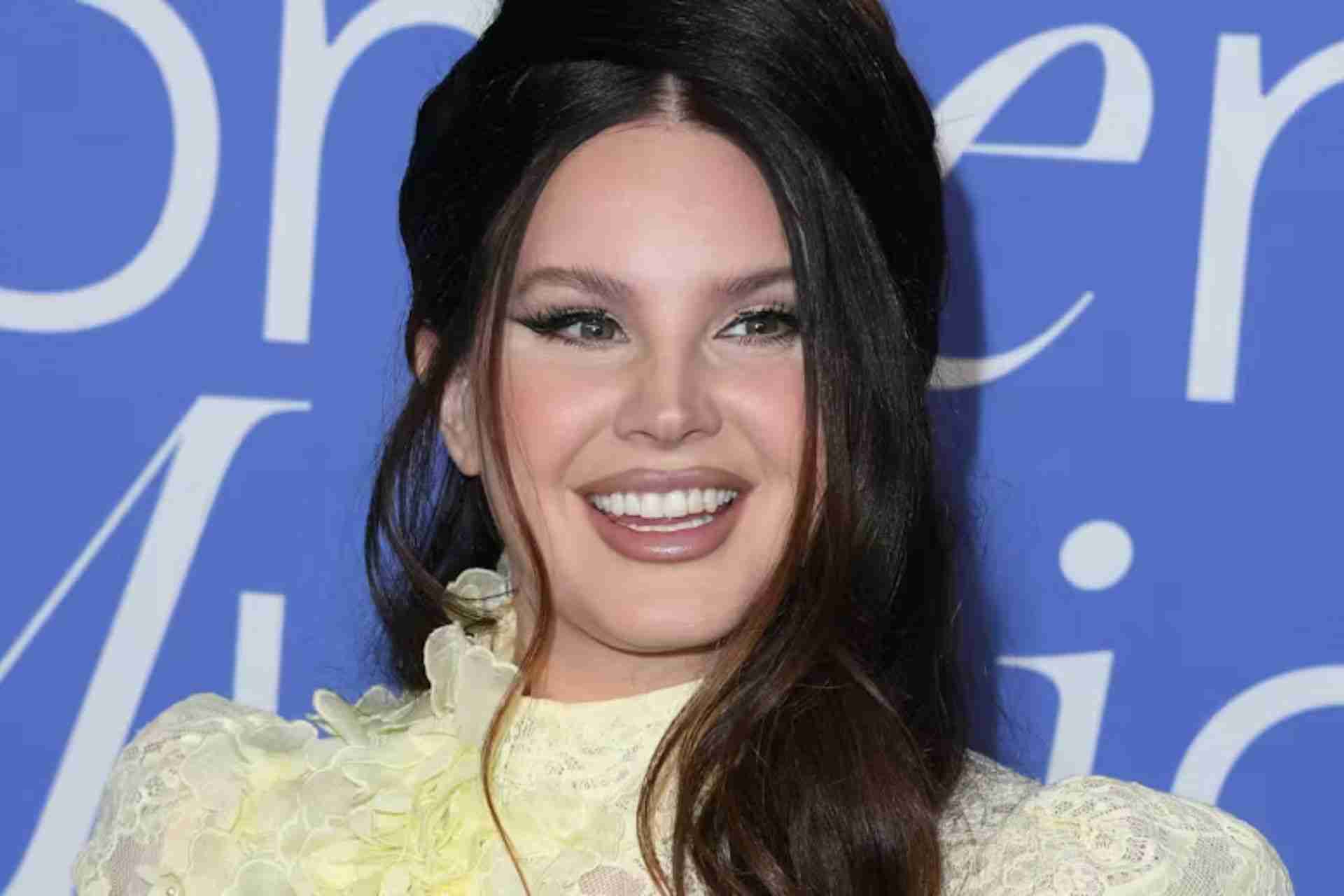
Lana Del Rey: Italian roots, American melancholy, and a future on her own terms
To talk about Lana Del Rey is not simply to talk about music. It is to talk about a cultural posture, a way of standing in the world that quietly resists speed, clarity, and easy optimism.
Since her emergence in the early 2010s, Lana Del Rey has occupied a singular space in American pop culture. She did not arrive with a promise of reinvention or empowerment slogans, but with something slower and harder to categorize: longing, ambiguity, and emotional gravity. In an industry obsessed with immediacy and constant self-updating, Lana Del Rey chose to linger. Her songs feel less like statements and more like confessions overheard late at night. This quality has turned her into a reference point not only for listeners, but for writers, critics, and scholars trying to understand how melancholy can function as a language rather than a mood.
Lana Del Rey Italian roots: Italian roots and the quiet weight of heritage
Lana Del Rey, born Elizabeth Grant, has Italian ancestry on her father’s side, a detail that rarely takes center stage in interviews but quietly informs her emotional architecture. Italian heritage within the Italian American experience is often not loud or performative. It exists in family structures, in the way memory is carried, in the unspoken importance of lineage and loss. This kind of heritage does not always translate into visible symbols, but into tone. Lana Del Rey’s work is deeply concerned with inheritance: emotional, cultural, and symbolic. There is a recurring sense of being shaped by something older than oneself, something that predates individual choice. This resonates strongly with the Italian American narrative, where the past is not a closed chapter but a constant presence. It is not about waving a flag. It is about feeling the past in your bones, even when you cannot fully name it.
From Elizabeth Grant to Lana Del Rey: building an identity slowly
Before Lana Del Rey existed, there was Elizabeth Grant, navigating uncertainty, small stages, abandoned projects, and artistic trial and error. Her early career was anything but smooth. Multiple attempts failed to gain traction, and her artistic direction was questioned repeatedly.
What makes this period significant is not struggle for its own sake, but duration. Lana Del Rey’s identity was not invented overnight. It was shaped through repetition, rejection, and persistence. When she finally emerged into the public eye, she did so with an aesthetic and narrative already fully formed. It felt deliberate, even inevitable. This slow construction is part of why her persona feels cohesive rather than manufactured. She did not chase trends. She waited them out.
Success without following the pop rulebook
Lana Del Rey’s global success disrupted the standard pop formula. Her breakthrough did not rely on dance routines, instant hooks, or upbeat narratives. Instead, it leaned into cinematic arrangements, languid tempos, and emotionally complex lyrics. For a while, critics did not know what to do with her.
Yet audiences connected. Deeply. Her music spoke to listeners who felt alienated by hyper-polished optimism. She offered something different, something that said: it’s okay to feel conflicted, it’s okay to linger in sadness, it’s okay not to have a clean arc. This was not supposed to work. But it did. And once it did, it changed the landscape. Other artists began to realize that vulnerability could exist without explanation, and that melancholy did not need to be cured to be meaningful.
Melancholy as a narrative language
Melancholy is often misunderstood as weakness, but in Lana Del Rey’s work it operates as structure. It is not an emotional accident; it is a method. Her songs are not about despair in isolation, but about the awareness that joy, love, and beauty are fragile and temporary.
This melancholy is observational rather than self-pitying. Lana Del Rey does not beg for rescue. She documents states of being. Her characters exist within contradictions, longing for intimacy while remaining emotionally distant, romanticizing love while recognizing its cost.
In this sense, her melancholy is closer to classic literary traditions than to modern pop confessionals. It creates space rather than closure. It invites reflection instead of resolution. And honestly, sometimes it just hits different.

Lana Del Rey
Lana Del Rey Italian roots. America as myth, memory, and disillusion
Few artists have engaged with the myth of America as persistently as Lana Del Rey. Highways, diners, motels, coastal towns, faded glamour: these are not decorative backdrops, but narrative tools. She uses them to explore what America promises and what it fails to deliver. Her America is not triumphant. It is nostalgic, worn, sometimes empty. It is an America already halfway into memory, even when it is still present. This perspective allows her to critique national mythology without moralizing it. For international audiences, especially European ones, this portrayal feels intimate and accessible. It strips away spectacle and replaces it with vulnerability. America becomes less of an idea and more of a feeling. A beautiful one, maybe, but also a fragile one.
Lana Del Rey Italian roots. Controversy, misunderstanding, and artistic stubbornness
Throughout her career, Lana Del Rey has faced criticism for her thematic choices. Some have accused her of romanticizing unhealthy dynamics or presenting outdated visions of femininity. Others have struggled with her refusal to align herself clearly with contemporary narratives.
What stands out is her response: she does not course-correct. Lana Del Rey does not rewrite her voice to fit expectations. She insists on ambiguity. She allows discomfort to exist. This stubbornness is not ignorance. It is a commitment to storytelling over messaging. Her songs are not instructions, they are scenes, they do not tell listeners what to think; they ask them to sit with complexity. And that is a rare thing in culture obsessed with clarity. As her career has progressed, Lana Del Rey’s music has grown quieter and more restrained. The lush orchestration of earlier work has given way to sparer arrangements, more conversational vocals, and direct lyricism.
This shift does not signal decline, but focus. There is less performance and more presence. Her voice feels closer, less mediated. The melancholy remains, but it is calmer, more reflective. This evolution mirrors the aging process itself: less urgency, more awareness. Lana Del Rey is no longer constructing an image. She is inhabiting it. And that difference matters.
Lana Del Rey Italian roots. The future of Lana Del Rey: continuity, depth, and quiet defiance
Looking toward the future, Lana Del Rey does not appear interested in rupture, shock, or radical reinvention. Her artistic trajectory suggests the opposite: a deliberate commitment to continuity, to deepening rather than replacing her inner landscape. While many artists feel pressured to reinvent themselves every few years to remain visible, Lana Del Rey has built a career on refusing that logic, her evolution is subtle, almost geological. Layers accumulate. Nothing is erased. What likely awaits her is not a new persona, but a further stripping down of what already exists. The grand American symbols may recede even more, giving space to interiority, memory, and reflection. Her recent work already hints at this direction: fewer cinematic gestures, more diaristic tones, a stronger sense of temporal awareness. Time, aging, and emotional residue seem poised to become even more central. This is not nostalgia as aesthetic decoration, but nostalgia as lived condition. In an industry increasingly driven by virality, immediacy, and algorithmic pressure, Lana Del Rey’s refusal to hurry feels almost subversive. She does not chase relevance; she allows it to come to her. That stance may limit spectacle, but it strengthens longevity. Artists like her tend not to dominate moments, but to endure eras. And honestly, that’s the long game. Her future work will likely continue to divide opinion. Some will want clarity, empowerment narratives, sharper statements. Lana Del Rey has never been interested in delivering those on demand. She operates in ambiguity, and she trusts the listener to do some of the work. That trust is rare, and it is part of why her audience remains deeply loyal.
Why Lana Del Rey feels permanent in a temporary industry?
When thinking about Lana Del Rey today, beyond albums, aesthetics, or chart positions, what stands out most is her role as a cultural counterweight. She exists in moment where emotional life is often simplified, optimized, or repackaged into digestible narratives. Lana Del Rey moves in the opposite direction. She complicates feeling. She slows it down. She allows it to remain unresolved. That alone gives her work a durability that goes beyond musical trends. One of the less discussed aspects of her relevance is how she legitimized emotional opacity. In contemporary culture, artists are often expected to explain themselves: their pain, their politics, their intentions. Lana Del Rey has consistently resisted that pressure. She does not annotate her own work excessively, and she does not rush to clarify ambiguity. This creates a rare space where listeners are not guided toward a single interpretation. Instead, they are left alone with their reactions. That solitude, uncomfortable as it may be, is precisely where her music operates best. Another element worth considering is how her work speaks to generational fatigue. Many of her listeners are not looking for aspiration or transformation narratives. They are navigating uncertainty, emotional overload, and a sense that progress is not linear. Lana Del Rey does not promise solutions. She reflects states of suspension, waiting, and quiet endurance. In doing so, she gives shape to feelings that are otherwise difficult to articulate. Her songs often function less as soundtracks and more as mirrors. Lana Del Rey matters because she models an alternative relationship with visibility. She participates in fame without fully surrendering to it. She is present, but not constantly accessible. This distance preserves a sense of interior life, something increasingly rare in public figures. It reinforces the idea that not everything meaningful must be explained, shared, or resolved in real time.
In the long run, Lana Del Rey may be remembered less as a pop icon and more as a chronicler of emotional states. Someone who gave language to longing without romanticizing resolution. Someone who trusted silence as much as sound.
