
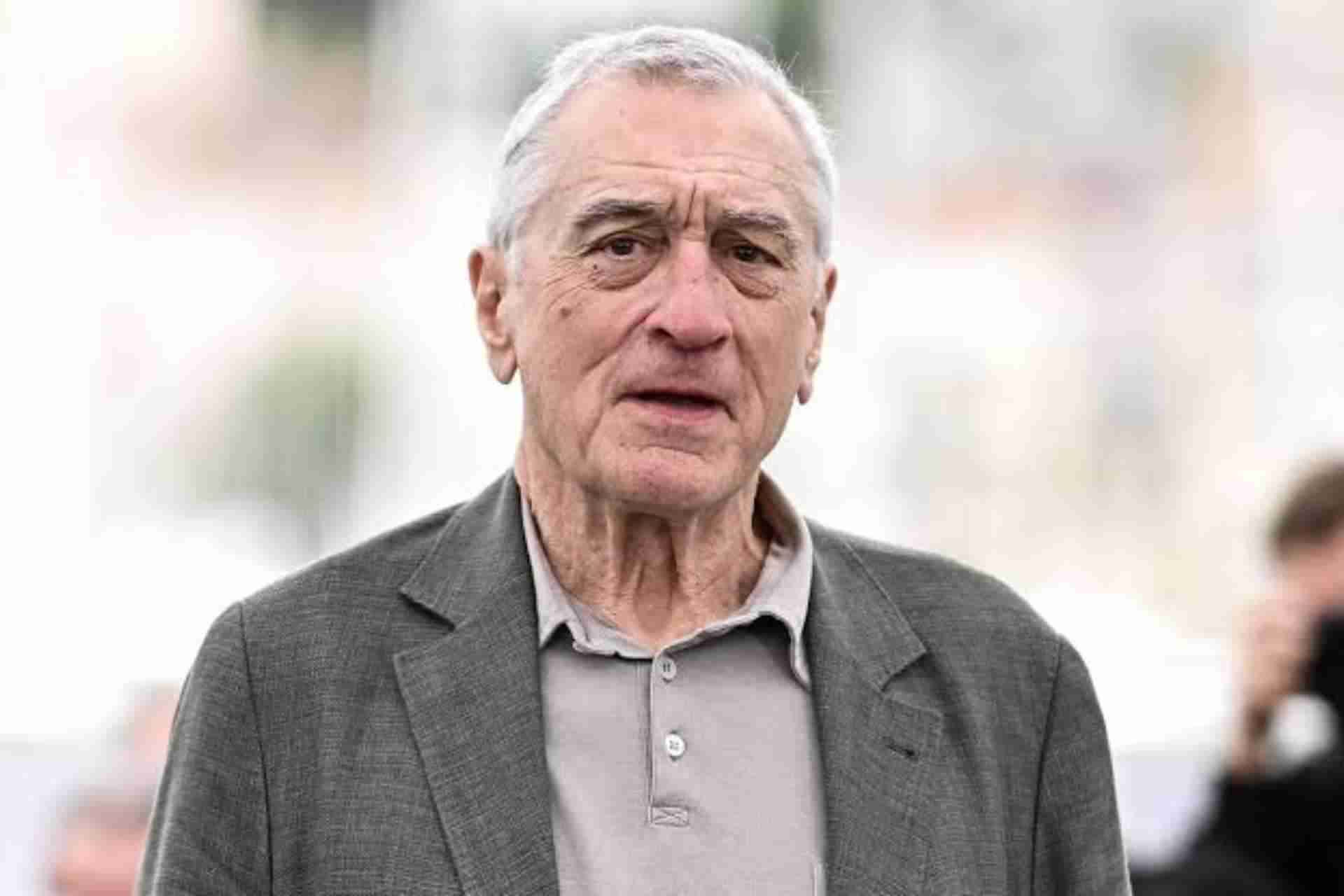
Robert De Niro: a legendary career with an Italian soul
Robert De Niro’s birthday falls on August 17—a perfect occasion to reflect on a career that reshaped acting while carrying a distinctly Italian heartbeat. De Niro is more than a movie star. For people who love Italy—its neighborhoods, dialects, Sunday tables, and family codes—he has long stood as a cinematic bridge between New York grit and Mediterranean memory. From the pavements of Little Italy to the grand stages of the Academy Awards, De Niro’s choices have reflected an obsession with truth: getting the sound right, the gesture right, the silence right. That search for precision became his signature and, in time, his gift to audiences worldwide.
Robert De Niro: early life in Little Italy
Robert Anthony De Niro Jr. was born in Greenwich Village in 1943 and grew up near Little Italy, where groceries smelled of tomatoes and oregano, and the streets carried traces of immigrant languages. His parents, Robert De Niro Sr. and Virginia Admiral, were both artists. His father’s line included Italian and Irish roots, while his mother’s drew from Dutch, English, French, and German ancestry. The house was filled with canvases and conversation rather than celebrity. As a child, Robert was pale and quiet—neighbors nicknamed him “Bobby Milk.” He found company at the movies, where characters spoke with more clarity than real life. At sixteen, he took a leap that already sounded like a De Niro character: he left high school to act. It wasn’t rebellion for its own sake; it was commitment. If craft asks for time, he decided to give it everything.
Robert De Niro. Training the craft: Adler, Strasberg, and the method
De Niro studied at the Stella Adler Conservatory, then at Lee Strasberg’s Actors Studio. Both teachers demanded rigor. Stella Adler focused on imagination, on building a character’s world in detail. Strasberg’s method acting turned the actor’s body and memory into instruments, requiring discipline bordering on the monk-like. The results were visible early: De Niro didn’t “play” a role; he inhabited it. He learned habits, dialects, and physical rhythms until they felt automatic. If the part required a new body, he built one. If it required unlearning the comfort of English to speak Sicilian, he did it. The audience might not catch every nuance, but the camera did, and that made all the difference.
Robert De Niro – source CNN
The Scorsese connection: when New York meets destiny
Some collaborations change cinema; De Niro and Martin Scorsese changed expectations. Both were New Yorkers with Italian roots, both alert to the language of the streets and the contradictions of ambition. Together they shaped a gallery of American characters that felt startlingly real.
Mean Streets (1973): the spark
As Johnny Boy in Mean Streets, De Niro didn’t just light up a scene—he destabilized it. The performance was raw and reckless, a portrait of neighborhood volatility. Critics took note: a new kind of intensity had arrived.
Taxi Driver (1976): the mirror of a city
With Travis Bickle in Taxi Driver, De Niro became a figure of urban isolation. His improvised line—“You talkin’ to me?”—wasn’t a slogan but a symptom: a man arguing with his reflection, drifting through a city that had lost its compass. The role set a standard for psychological honesty on film.
Raging Bull (1980): body as biography
For Jake LaMotta in Raging Bull, De Niro sculpted two bodies: the brutal athlete and the man after the bell, heavier, winded, regretful. He reportedly gained over 50 pounds for the later scenes, not as a trick but as a way to let the weight of the years sit in the frame. The Academy Award followed, but the real prize was artistic permanence.
Goodfellas (1990) and beyond: charisma with a shadow
As Jimmy Conway in Goodfellas, he radiated charm that could turn, in a blink, into danger. The Scorsese partnership later stretched into new chapters—Casino, The Irishman—each time revisiting questions of loyalty, memory, and cost.
Robert De Niro. Italian American identity: more than a role
De Niro’s Italian side was never a costume. His great-grandparents came from Ferrazzano in Molise, and he has often spoken about the pull of that heritage. In 2006 he obtained Italian citizenship, formalizing a bond that had always been personal. The best proof sits on screen. In The Godfather Part II (1974), he played the young Vito Corleone not as a cliché but as a human being shaped by exile, survival, and pride. De Niro spent months in Sicily, listened more than he spoke, and worked until the Sicilian dialect sounded organic. The performance won an Oscar for Best Supporting Actor, but its deeper victory was cultural: it showed that Italian American characters could be drawn with empathy and detail, not caricature.
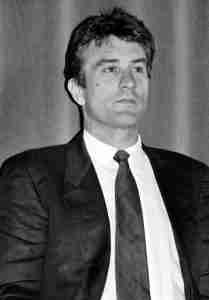
Robert De Niro at the 1988 Deauville American Film Festival
Beyond the mob: a wide-open range
Because De Niro did the mob so well, people sometimes forget how broad his work is. He has moved across genres with the same seriousness he brought to the streets of New York.
Robert De Niro: dramas that stay with you
In The Deer Hunter (1978), De Niro explored trauma and loyalty against the backdrop of the Vietnam War, delivering a quiet intensity that carries the film’s moral weight. In Awakenings (1990), opposite Robin Williams, he approached illness and hope with tenderness, showing a body relearning how to be alive. With Cape Fear (1991), he reversed the tenderness into menace, building an antagonist whose smile could chill a room.
Robert De Niro: comedies that reframe his image
At the end of the 1990s, De Niro shifted gears with Analyze This (1999) and Meet the Parents (2000). The comedy didn’t cheapen his persona; it reframed it. He learned to play with his own myth, to time a glance as precisely as a punch, proving that timing and tension belong to comedy as much as to drama.
Robert De Niro: later chapters, new shades
In Silver Linings Playbook (2012), De Niro became a father who loves fiercely and worries constantly—a performance calibrated in small gestures and nervous rituals. In The Irishman (2019), returning to Scorsese, he looked straight at aging and consequence. The film feels like an echo chamber for a lifetime of roles, with De Niro giving silence the final word.
De Niro the builder: culture, neighborhoods, hospitality
A career this rich could have stood alone. De Niro chose to build around it.
Robert de Niro and The Tribeca Film Festival
In 2002, with producer Jane Rosenthal and others, he co-founded the Tribeca Film Festival to revitalize downtown Manhattan after 9/11. The idea was simple and generous: bring artists, audiences, and businesses back to the streets. The festival grew into a platform for independent voices, documentaries, and international cinema—proof that storytelling can help heal a neighborhood and energize a city.
Robert De Niro: Nobu and the Greenwich Hotel
De Niro also helped create the Nobu restaurant group with chef Nobu Matsuhisa, now a global name in dining. He invested in the Greenwich Hotel in Tribeca, a property that feels as crafted as a film set—materials chosen with care, atmosphere tuned for conversation rather than noise. These ventures aren’t vanity projects; they reflect a personal standard: quality, longevity, and a sense of place.
Honors and recognition: trophies that tell a story
Counting awards can be dull, but in De Niro’s case the list sketches a path. He has earned two Academy Awards—Best Supporting Actor for The Godfather Part II and Best Actor for Raging Bull. He received multiple Golden Globes, the Cecil B. DeMille Award for lifetime achievement, and the Presidential Medal of Freedom, the highest U.S. civilian honor. He has appeared in over one hundred films, mentored younger actors, and continued to collaborate with directors who value precision over noise. The numbers matter less than the consistency: decade after decade, De Niro kept the bar high.
Robert De Niro: a private man who speaks plainly
Despite global fame, De Niro has guarded his private life. Yet when he chooses to speak—about politics, free expression, or the arts—he favors clarity. The New York phrase fits: he tells it like it is. That directness mirrors his acting: no ornament, no bluff, just the line delivered clean.
Robert De Niro. Italy in the frame: places and flavors behind the roles
For readers who love Italy, De Niro’s story carries a travel map. Ferrazzano, the hilltop village tied to his family, sits above Campobasso in Molise, a region often overlooked by tourists. The lanes are narrow, the views wide, and the pace slow—good ground for understanding how memory passes between generations. The Sicilian training for The Godfather Part II hints at another itinerary: the countryside near Taormina and Savoca, where scenes of the young Corleone were filmed. These locations remind us that authenticity in De Niro’s work often began with listening: to locals, to elders, to the cadence of a place. If you walk those streets, you hear the same cadence in daily life—unhurried, exact, durable.
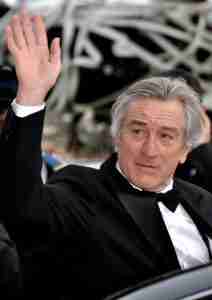
Robert De Niro, Cannes 2011 – by Georges Biard
Why De Niro’s approach still matters
Film technology changes fast; attention spans change even faster. De Niro’s method resists the rush. He prepares as if the film depended on it—because it does. That ethic has ripple effects. Directors can plan bolder shots when they trust the performance will carry them. Scene partners lift their game. Audiences sense the care, even when they can’t name it. There’s also a lesson about representation. De Niro’s Italian American characters—from Vito Corleone to the men of Scorsese’s New York—are drawn with empathy and detail. They possess humor, faith, stubbornness, and doubt. By refusing to flatten them into types, he widened the space for nuanced portrayals of heritage on screen. For an American audience that loves Italy, this approach feels like respect made visible.
Robert De Niro: what to watch (or rewatch) first
If you’re discovering De Niro or revisiting him for his birthday, this sequence offers a clear arc:
- The Godfather Part II (1974) – The origin of Vito Corleone, meticulous and humane.
- Taxi Driver (1976) – The portrait of a city and a mind in crisis.
- Raging Bull (1980) – Performance as biography; the craft at full power.
- Goodfellas (1990) – Charisma edged with danger, a masterclass in tension.
- Awakenings (1990) – Quiet empathy and physical control.
- Analyze This (1999) and Meet the Parents (2000) – A playful turn that proves range.
- The Irishman (2019) – A late-career summation with the weight of time.
Conclusion: the many lives of one actor
As his birthday returns each August, Robert De Niro’s career looks less like a straight line and more like a constellation—points of light across genres, decades, and collaborations. What unites them is the discipline to tell the truth about a character and the humility to learn the details that make that truth readable. He honored his Italian heritage not by repeating stereotypes but by studying, listening, and rendering people as they are: complicated, loyal, wounded, proud. He built, with Scorsese and others, a body of work that feels inseparable from the history of American film. Off-screen he invested in neighborhoods, food, and festivals—things that bring people together. So, while the calendar reminds us that August 17 marks another year, the films remind us why the celebration matters: Robert De Niro kept faith with craft. He showed that a life in art can be rigorous, generous, and anchored in heritage. For anyone who loves Italy—and for anyone who loves movies—that combination is hard to forget.
